
The aroma of sizzling chicken mixed with vibrant vegetables transports me to bustling Korean markets, where communal tables overflow with laughter and shared plates. Today, I’m thrilled to introduce you to Dakgalbi, a spicy Korean stir-fried chicken dish that’s become a beloved staple in my kitchen. This recipe is not only quick to prepare, making it perfect for busy weeknights, but it also invites endless customization, whether you love extra heat or loads of colorful veggies. Imagine gathering your friends or family around the table, each bite a joyous celebration of bold flavors and hearty textures. Are you ready to transform your dinner routine? Let’s dive into making this delightful Konkuk University favorite!
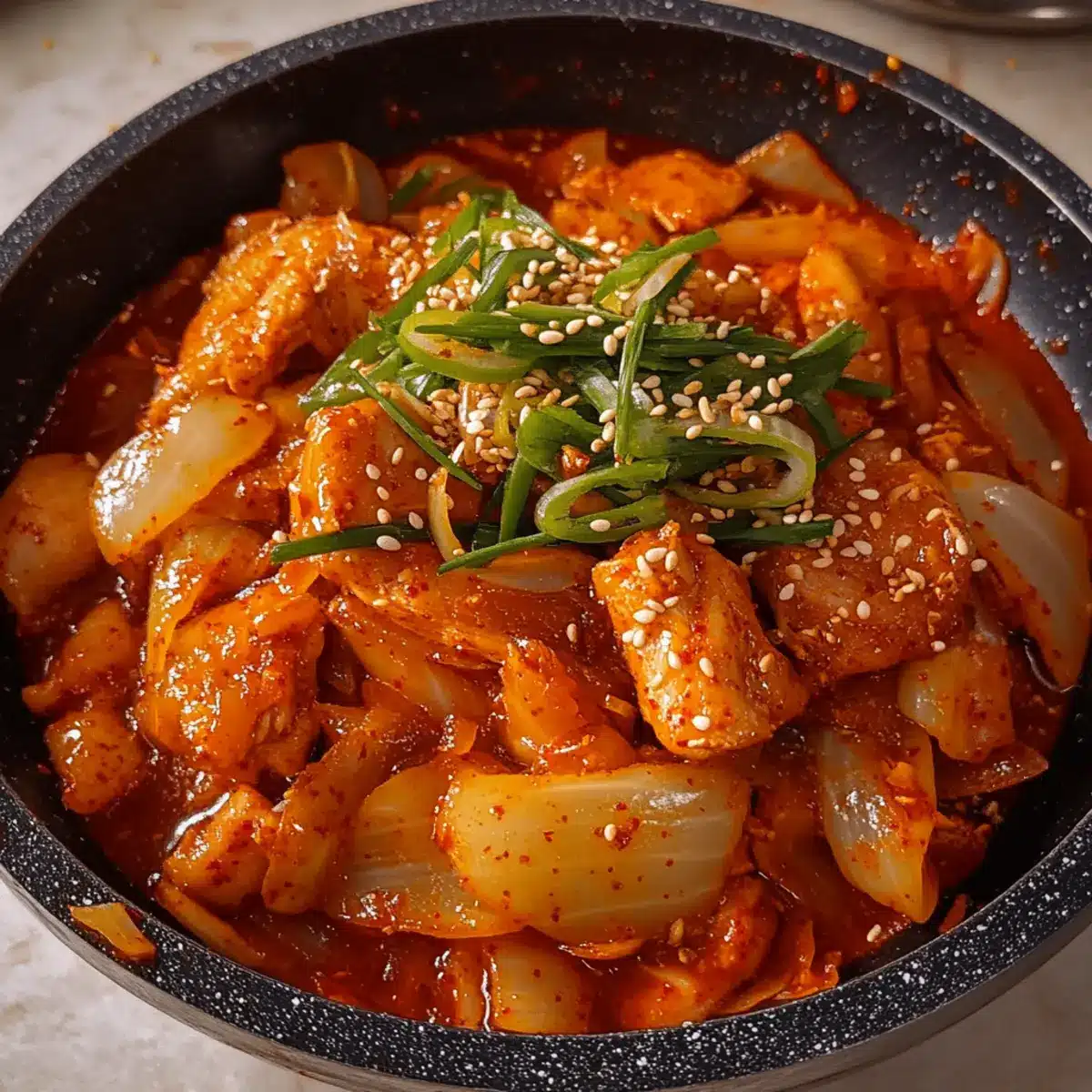
Why is Dakgalbi a Must-Try?
Bold flavors explode in every bite, combining spicy gochujang with tender chicken and crisp vegetables.
Customizable options allow you to tailor this dish to your palate—add more heat or roast your favorite veggies!
Quick preparation makes it perfect for a busy weeknight or last-minute gatherings.
Communal dining elevates the experience, as everyone can dig in together, fostering warmth and connection.
Nutrient-rich ingredients like cabbage and carrots provide a healthy base, ensuring you’re serving up comfort that’s good for you.
Dakgalbi Ingredients
Make this tasty dish your own with the perfect blend of flavors and textures!
For the Chicken
- Chicken Thighs – Tender and flavorful, boneless and skinless chicken thighs cook quickly and easily.
For the Vegetables
- Onion – Adds a touch of sweetness; yellow or white varieties work best for this dish.
- Carrot – Provides a delightful crunch and natural sweetness; feel free to swap in bell peppers if desired.
- Cabbage – This leafy vegetable soaks up the flavors; both Napa and green cabbage are excellent choices.
- Green Onions – Fresh and vibrant, they enhance the dish’s presentation and flavor.
For the Chewy Component
- Rice Cakes (Tteok) – Essential for that delightful chewiness; other rice cakes can be used if needed.
For the Sauce
- Gochujang – The heart of Dakgalbi, this spicy paste delivers depth and heat; adjust to your liking.
- Soy Sauce – Adds savory umami goodness; low-sodium options are available for a healthier choice.
- Rice Wine or Mirin – This helps balance flavors with a touch of sweetness; vinegar can be a substitute if you’re in a pinch.
- Sesame Oil – Infuses a nutty aroma and is a staple in Korean cooking.
- Sugar – Helps balance the spice; consider using honey or omitting it for a lighter option.
- Garlic Powder & Ginger Powder – These spice staples amplify flavor while saving you time; fresh versions are great, too.
- Black Pepper – Adds a gentle kick; feel free to adjust based on your preference.
For Garnishing
- Sesame Seeds – Sprinkle these on top for added texture and visual appeal.
Step‑by‑Step Instructions for Dakgalbi
Step 1: Soak the Rice Cakes
Begin by soaking the rice cakes (tteok) in water for about 30 minutes until they soften. Drain them well and set aside. This step is crucial in achieving that delightful chewiness that makes Dakgalbi so enjoyable. As they soak, gather all your ingredients to streamline the cooking process.
Step 2: Prepare the Sauce
In a mixing bowl, combine gochujang, soy sauce, rice wine or mirin, sesame oil, sugar, garlic powder, ginger powder, and black pepper. Whisk these ingredients together until smooth and well integrated. This savory and spicy sauce is the heart of your Dakgalbi; feel free to adjust it to your desired spice level as you mix.
Step 3: Cook the Chicken
Heat a large skillet or wok over medium-high heat and add vegetable oil. Once the oil glistens, add the chicken thighs to the pan. Stir-fry the chicken for about 5-7 minutes until it’s browned on the outside and cooked through. The chicken should look golden and no longer pink in the center, which will ensure a juicy base for your stir-fry.
Step 4: Add the Vegetables
Next, toss in sliced onion, carrot, and cabbage into the skillet with the chicken. Stir-fry these vegetables for 3-4 minutes until they become tender yet remain crisp. The vibrant colors and aromas will fill the kitchen, signaling that your Dakgalbi is coming together beautifully.
Step 5: Combine the Rice Cakes and Sauce
Now, gently fold in the soaked rice cakes and the prepared sauce into the skillet. Stir everything together, ensuring all ingredients are well coated in the rich sauce. Allow it to cook for an additional 3-5 minutes, letting the flavors meld together while the sauce thickens slightly around the chicken and veggies.
Step 6: Garnish and Serve
Finally, remove the Dakgalbi from heat and plate it up. Garnish with a sprinkle of sesame seeds and sliced green onions for a burst of freshness and crunch. Serve directly from the skillet for a communal dining experience, inviting everyone to dig in and enjoy this delicious, spicy Korean dish together!
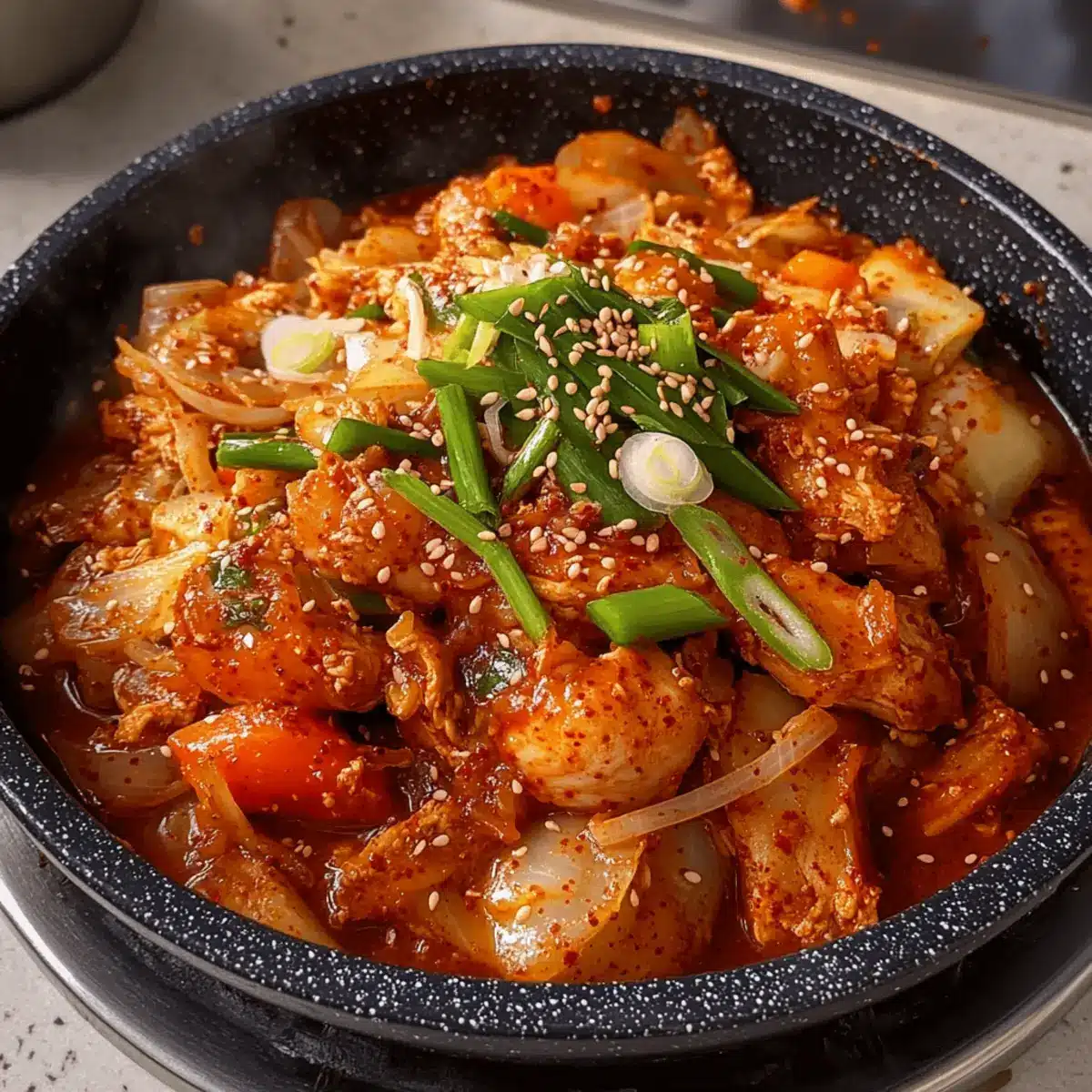
How to Store and Freeze Dakgalbi
Fridge: Store leftover Dakgalbi in an airtight container for up to 3 days. Simply reheat on the stovetop with a splash of water to maintain moisture.
Freezer: For longer storage, freeze Dakgalbi in an airtight container for up to 3 months. Thaw overnight in the fridge before reheating.
Reheating: When ready to enjoy, heat gently on the stovetop, adding a little water or broth to revive the sauce and prevent drying out.
Room Temperature: It’s best to avoid leaving Dakgalbi out at room temperature for over 2 hours to ensure safety and freshness.
Dakgalbi: Endless Customization Awaits!
Feel free to embrace your culinary creativity and customize this dish to suit your taste preferences and dietary needs.
- Spicy Kick: Increase the heat by adding gochugaru (Korean chili flakes) or extra gochujang to really fire things up.
- Vegetable Medley: Incorporate non-traditional options like zucchini or asparagus for delightful twists that keep the dish fresh and exciting. The more colors you add, the more vibrant your Dakgalbi becomes!
- Protein Variation: Swap chicken for tofu or beef to suit your protein preferences, ensuring everyone around the table finds something they enjoy.
- Sesame Flavor Boost: Enhance nuttiness with toasted sesame seeds or extra sesame oil—your taste buds will thank you!
- Universal Substitutions: If you want to make it gluten-free, opt for tamari instead of soy sauce.
- Creamy Spin: Add a splash of coconut milk to the sauce for a rich and creamy texture, perfect for those who love a more mellow flavor profile.
- Fruit Infusion: Toss in pineapple chunks during cooking for a sweet contrast paired with the spicy flavors, creating a delightful sweet and savory experience.
- Herbal Finish: For a refreshing lift, sprinkle freshly chopped cilantro or mint right before serving. This adds an aromatic finish that brightens every bite!
Incorporating these variations brings that personal touch, transforming your Dakgalbi into a cherished family classic that keeps everyone coming back for more. Don’t forget to check out additional recipes or tips on how to make the perfect kimchi alongside your Dakgalbi for an unforgettable meal!
Expert Tips for Dakgalbi
- Marinate for Tenderness: Consider marinating chicken thighs in milk and soy sauce for at least 30 minutes to enhance tenderness.
- Watch Your Veggies: Avoid overcooking vegetables; retain their crispness for a delightful contrast in textures.
- Sauce Adjustment: Personalize the gochujang quantity according to your desired spice level; remember, you can always add more!
- Heat Management: Use medium-high heat for even cooking; a heavy skillet distributes heat better and prevents burning.
- Leftover Love: If you have leftovers, store them in the fridge for 2-3 days; reheat gently with a splash of water to keep things moist.
- Customizable Add-ins: Feel free to add kimchi or other vegetables like zucchini for extra flair to your Dakgalbi!
Make Ahead Options
Dakgalbi is an ideal dish for meal prep enthusiasts! You can marinate the chicken thighs in the sauce for up to 24 hours in advance to enhance the flavors. Additionally, soak and drain the rice cakes the night before, allowing them to absorb moisture, which keeps them chewy. Chop the vegetables (onion, carrot, and cabbage) ahead of time and store them in an airtight container in the refrigerator for up to 3 days. When you’re ready to cook, simply stir-fry the marinated chicken along with the prepped vegetables and soaked rice cakes, following the original steps for a quick weeknight meal. Your Dakgalbi will be just as delicious, saving you precious cooking time!
What to Serve with Spicy Korean Dakgalbi
Dakgalbi is not just a meal; it’s a sensational experience that pairs beautifully with a variety of side dishes and beverages!
- Steamed Rice: Serves as a wonderful canvas that absorbs the rich flavors of the Dakgalbi while balancing its spice.
- Lettuce Wraps: Provides a fresh, crisp contrast, making each bite refreshing and light; ideal for a make-your-own wrap night!
- Kimchi: This tangy, fermented side complements the dish’s heat with its own delightful zing, amplifying the overall flavor profile.
- Korean Potato Salad: Creamy and sweet, this dish offers comfort and a mellow contrast to the spicy Dakgalbi, creating a perfect harmony of tastes.
- Cold Noodle Salad: Cool, chewy noodles dressed in a light vinaigrette refresh the palate, providing a satisfying textural balance.
- Pickled Vegetables: Their tanginess cuts through the richness, cleansing the palate and enhancing the overall dining experience.
- Sake or Soju: A chilled glass pairs fabulously; the smoothness complements the bold flavors, making for a delightful sip alongside your meal.
- Green Tea: This warm beverage soothes and enhances the dining experience, toning down spice while refreshing the palate.
- Chilled Fruit Salad: A mix of sweet, juicy fruits offers a pleasant, cooling finish to the meal after all those bold flavors.
- Chocolate Mousse: End on a sweet note! The richness of chocolate perfectly balances the spiciness, leaving a wonderful aftertaste.
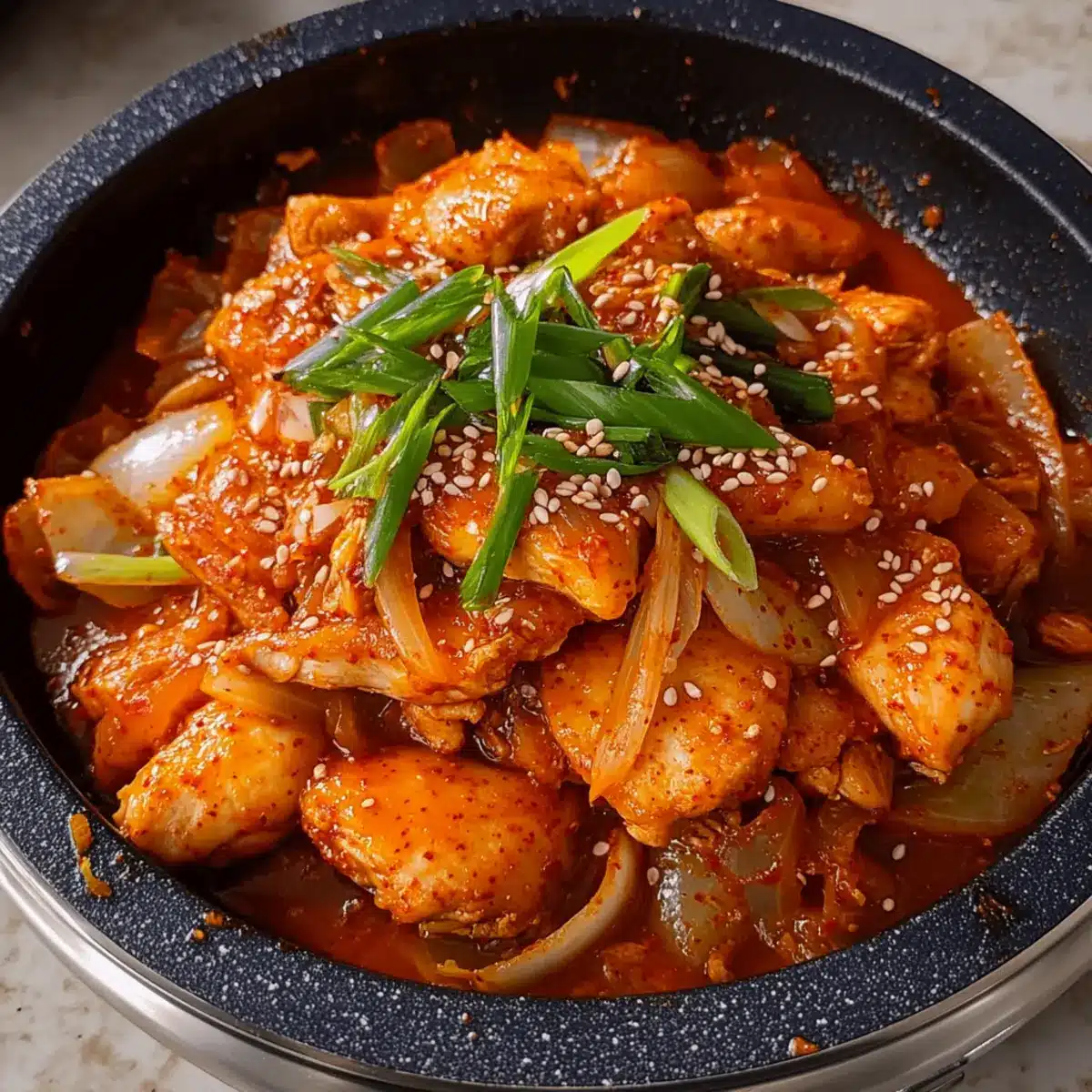
Dakgalbi Recipe FAQs
How do I choose the best chicken for Dakgalbi?
Absolutely! For the best results, opt for boneless and skinless chicken thighs. They have a higher fat content than chicken breasts, which keeps them tender and juicy during cooking, ensuring they soak up all that delicious gochujang sauce.
How long can I store leftover Dakgalbi in the fridge?
You can store your leftover Dakgalbi in an airtight container in the refrigerator for up to 3 days. When you’re ready to enjoy it again, just reheat it on the stove with a splash of water to maintain moisture, so it doesn’t dry out.
Can I freeze Dakgalbi? How?
Absolutely! To freeze Dakgalbi, let it cool completely and then transfer it to an airtight container or freezer bag. It can be frozen for up to 3 months. When ready to consume, simply thaw it overnight in the fridge and reheat it gradually on the stovetop, adding a splash of water or broth to keep the dish moist.
What should I do if my sauce is too spicy?
Very! You can balance the heat by adding a touch more sugar or a splash of mirin to mellow the spiciness. If you’re finding the sauce overpowering, consider adding more diced vegetables to the mix to absorb some of the heat, or serve it over a bed of rice to temper the flavors.
Can I adjust Dakgalbi for dietary restrictions?
Definitely! If you’re cooking for someone with dietary restrictions, you can easily customize Dakgalbi. To make it gluten-free, use tamari or a gluten-free soy sauce instead of regular soy sauce. For vegan options, simply substitute the chicken with tofu or a medley of vegetables, and use a plant-based sauce. Always check ingredient labels for allergens as well to ensure safety.
How can I ensure my vegetables stay crunchy?
To maintain that delightful crunch, cook the vegetables for just 3-4 minutes until they are tender yet crisp. Avoid overcrowding the pan, and keep the heat at medium-high. Stir them gently without overcooking, as you want them to enhance the texture of your dish rather than become mushy.
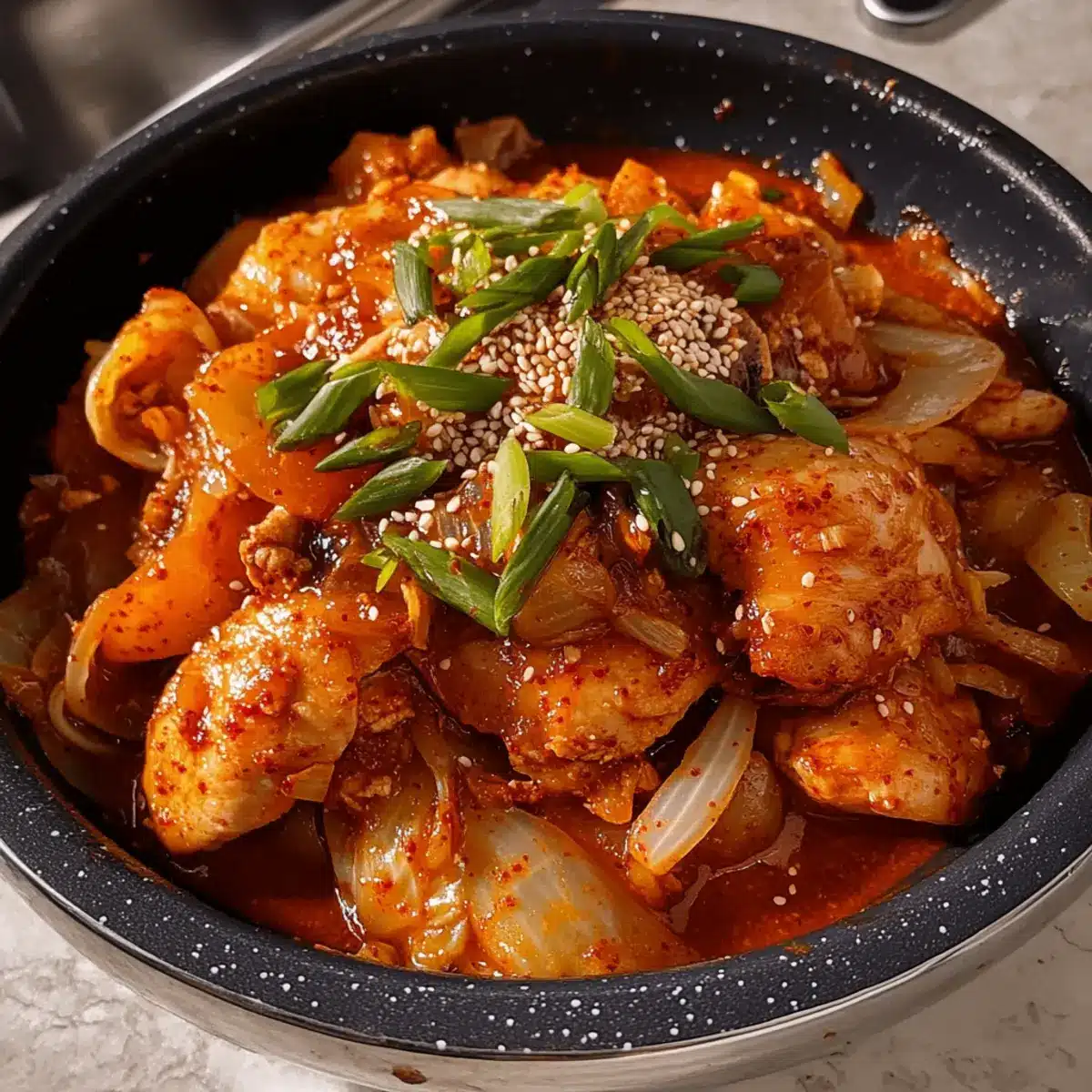
Delicious Dakgalbi: Easily Customize Your Favorite Stir-Fry!
Ingredients
Equipment
Method
- Soak the rice cakes (tteok) in water for about 30 minutes until they soften. Drain and set aside.
- In a mixing bowl, combine gochujang, soy sauce, rice wine or mirin, sesame oil, sugar, garlic powder, ginger powder, and black pepper. Whisk until smooth.
- Heat a large skillet or wok over medium-high heat and add vegetable oil. Once glistening, add chicken thighs and stir-fry for 5-7 minutes until browned and cooked through.
- Toss in sliced onion, carrot, and cabbage into the skillet with the chicken. Stir-fry for 3-4 minutes until tender yet crisp.
- Gently fold in the soaked rice cakes and prepared sauce, stirring to coat. Cook for an additional 3-5 minutes, allowing flavors to meld.
- Remove from heat, garnish with sesame seeds and green onions. Serve directly from the skillet.
Leave a Reply