
As I stirred the pot, the fragrant aroma of sautéed garlic and fresh asparagus filled my kitchen, instantly transporting me to sunlit spring gardens. This Creamy One-Pot Spring Vegetable Pasta is my go-to dish when I’m juggling life and craving something wholesome. With a rich, comforting sauce and a medley of vibrant vegetables, it brings together simple ingredients for a satisfying dinner in no time. Not only is this recipe a breeze to prepare, but it also requires minimal cleanup—perfect for those busy weeknights when you’re exhausted yet still want nourishing homemade food. Plus, it’s easily customizable, allowing you to tailor it to your veggie preferences or dietary needs. Have you ever whipped up a dish that made your heart sing while also being flexible enough to accommodate whatever is in your fridge? Let’s dive into this delicious one-pot wonder!
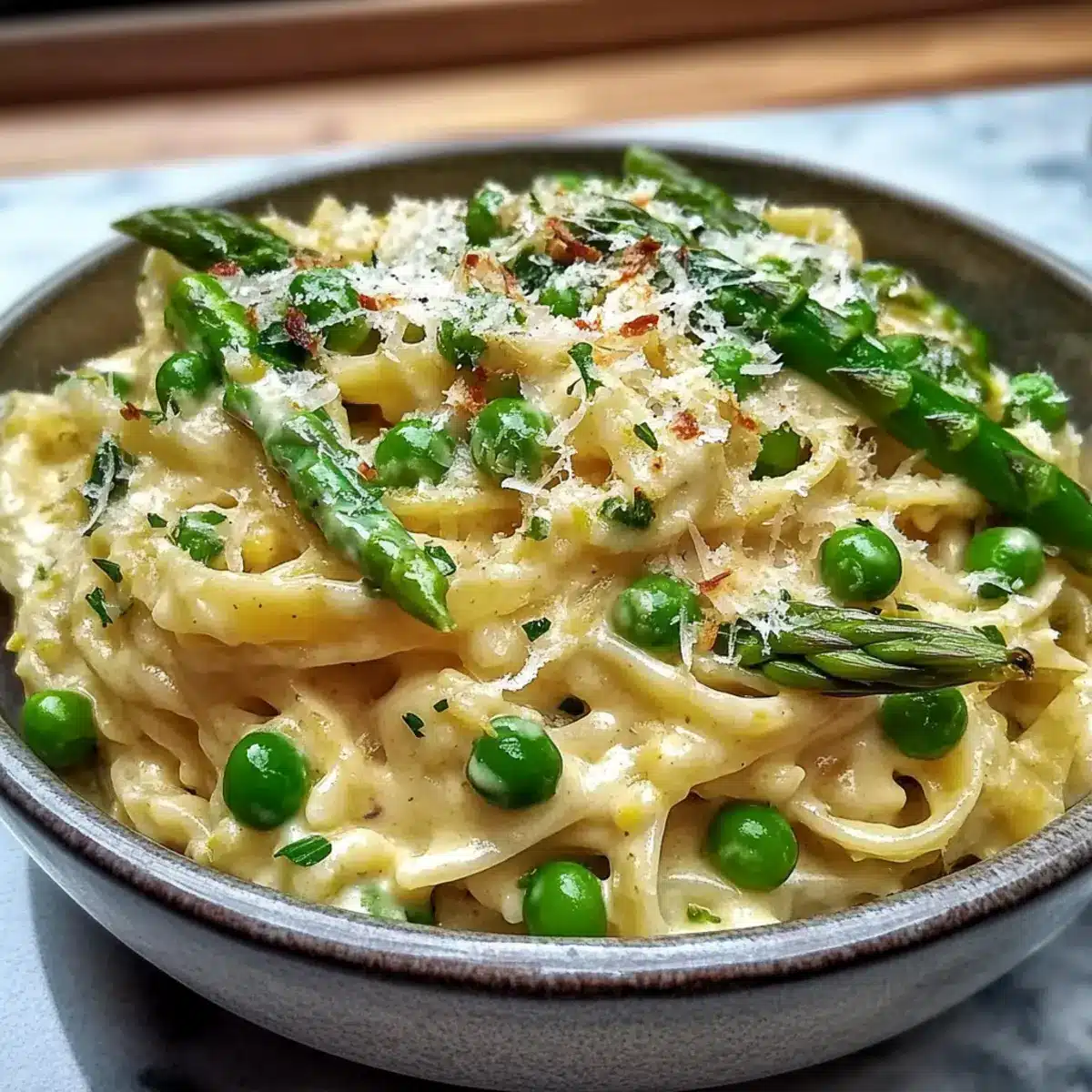
Why is Spring Vegetable Pasta a Must-Make?
Convenience: This one-pot wonder means less time cleaning and more time enjoying delicious food!
Fresh Ingredients: Bursting with seasonal vegetables, it’s a celebration of spring’s vibrant flavors in each bite.
Customization: Easily adjust the ingredients based on what you have on hand, making it perfect for using up leftover veggies.
Creamy Comfort: The rich sauce, made with either cream or coconut milk, adds a delectable creaminess that feels indulgent yet healthy.
Nutrient-Packed: With a good balance of fiber and vitamins, this pasta dish isn’t just easy to make; it’s wholesome too.
Pair it with a refreshing side salad or try it alongside a citrusy cowboy caviar salad for a complete meal!
Spring Vegetable Pasta Ingredients
For the Pasta
• Short pasta (penne or fusilli) – Use ridged pasta for better sauce adherence.
For the Sauce
• Vegetable broth – Choose a low-sodium variety to control salt levels while enhancing flavor.
• Cream or coconut milk – Adds richness; substitute with full-fat coconut milk for a dairy-free option.
• Olive oil – Used for sautéing, contributing to the dish’s overall creaminess.
For the Vegetables
• Asparagus – Adds bright color and a mild, earthy taste; add first to retain texture.
• Sweet peas – Use fresh or frozen; add them at the end to keep their vibrant color and sweetness.
For Flavor
• Garlic – Provides aromatic flavor; sauté until fragrant to infuse the dish.
• Parmesan cheese – Offers a savory umami punch; nutritional yeast works for a dairy-free option.
• Seasoning (salt, pepper, herbs) – Adjust to taste for a well-balanced flavor in your spring vegetable pasta.
Feel free to mix and match your favorite veggies, but remember that this Spring Vegetable Pasta is sure to bring a vibrant splash of spring to your dinner table!
Step‑by‑Step Instructions for Creamy One-Pot Spring Vegetable Pasta
Step 1: Sauté the Garlic
Begin by heating 2 tablespoons of olive oil in a large pot over medium heat. Add 2 minced garlic cloves and sauté for about 1–2 minutes until fragrant and golden but not burnt. This step infuses the oil with wonderful aromatic flavor that will enhance your Creamy One-Pot Spring Vegetable Pasta.
Step 2: Add Pasta and Broth
Next, incorporate 8 ounces of short pasta (like penne or fusilli) and 4 cups of vegetable broth into the pot. Stir in chopped asparagus and bring this mixture to a boil over high heat. Look for vigorous bubbling, which will signal that you can reduce the heat to a medium simmer.
Step 3: Simmer the Pasta
Allow the pasta to simmer for 10–12 minutes, stirring occasionally to prevent sticking. Keep an eye on the texture; the pasta should be al dente when done, with the asparagus tender yet still vibrant. This harmonious blend of textures is crucial for your spring vegetable pasta.
Step 4: Mix in Cream and Cheese
Once the pasta is cooked, reduce the heat to low and stir in 1 cup of cream or full-fat coconut milk along with ½ cup of grated Parmesan cheese. If the sauce seems too thick, you can add an extra splash of broth. Stir well until the cheese melts and everything is beautifully combined in a creamy sauce.
Step 5: Fold in Delicate Vegetables
Gently fold in 1 cup of sweet peas, fresh or frozen, letting them cook for just 2-3 minutes. This step retains their bright color and sweetness in the Creamy One-Pot Spring Vegetable Pasta. The residual heat will warm them up perfectly without losing that delightful crunch.
Step 6: Serve and Garnish
Remove the pot from heat and give the pasta a final stir. Serve hot, garnished with extra Parmesan cheese and a sprinkle of fresh herbs, like basil or parsley, for a vibrant touch. Dive into this creamy, comforting meal that celebrates the essence of spring!
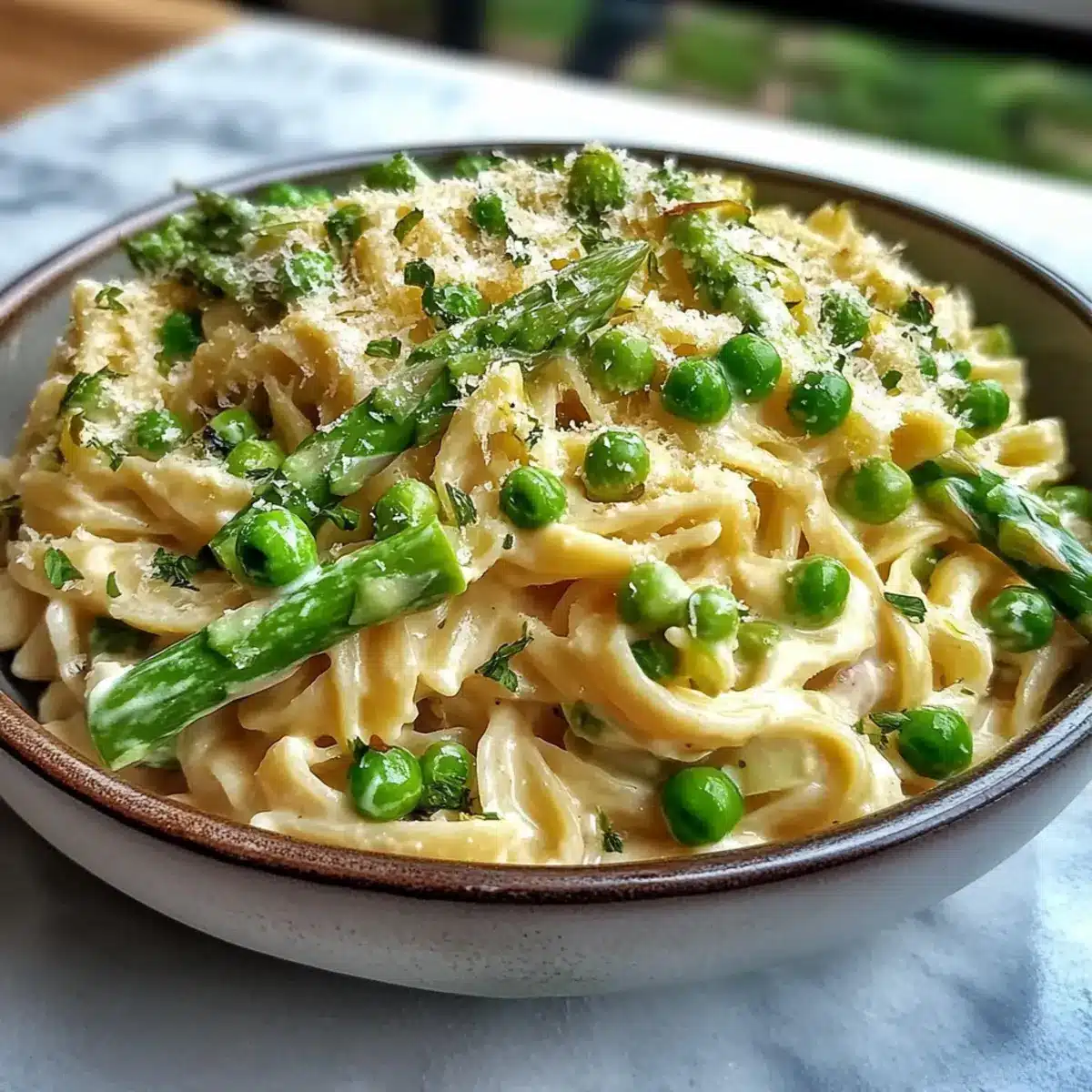
Make Ahead Options
These Creamy One-Pot Spring Vegetable Pasta dishes are a dream for busy home cooks! You can prep the pasta and sauté the garlic up to 24 hours in advance and store them separately in the refrigerator. The chopped vegetables, particularly the asparagus, can also be prepped ahead; simply refrigerate them in an airtight container until you’re ready to cook. To maintain freshness, add the delicate sweet peas just before serving. When you’re ready to enjoy your meal, combine everything in a pot, add the broth, and simmer for about 10-12 minutes. This way, you’ll have a wholesome dinner on the table with minimal effort and maximum flavor!
Spring Vegetable Pasta Variations
Feel free to tailor this recipe to suit your taste, making it even more delightful!
-
Gluten-Free: Use gluten-free pasta instead to enjoy this dish without the gluten. Choose a variety that mimics the texture of traditional pasta for the best results.
-
Dairy-Free: Substitute cream with full-fat coconut milk for a rich, creamy sauce that’s entirely dairy-free. This will lend a hint of tropical flavor while keeping things cozy.
-
Protein-Packed: Add grilled chicken or sautéed shrimp for a heartier meal. This variation is perfect for those who want a protein boost alongside their veggies.
-
Flavor Explosion: Toss in a handful of sun-dried tomatoes to add a tangy punch to your dish. Their rich flavor contrasts beautifully with the creamy sauce and fresh spring vegetables.
-
Roasted Veggies: Swap fresh veggies for roasted ones, like bell peppers or zucchini, for a smokier flavor. This adds depth and varies the dish’s texture, bringing surprise in each bite.
-
Herb Infusion: Enhance the flavor by adding fresh herbs such as basil, oregano, or thyme. It brightens the dish, making every forkful feel like a fragrant spring garden.
-
Heat It Up: Add a pinch of red pepper flakes or some diced jalapeños for a spicy kick. This is perfect for those who like their meals with a little heat!
-
Seasonal Swaps: Use whatever seasonal vegetables you have on hand, like broccoli or green beans, to keep it fresh and aligned with your local produce. It’s a great way to make each dish unique!
No matter how you choose to customize it, you’ll find that this Spring Vegetable Pasta remains a wonderfully satisfying and adaptable dish. Enjoy it with a side of Tomato Garlic Pasta or a comforting Pot Pizza Pasta for a delightful meal combo!
Expert Tips for the Best Spring Vegetable Pasta
-
Timing Matters: Add tougher vegetables like asparagus first, and softer veggies like peas at the end to avoid mushiness in your spring vegetable pasta.
-
Thick or Thin: If your sauce is too thick, add more broth or cream to achieve your desired consistency. For a thicker sauce, simmer uncovered.
-
Fresh vs. Frozen: Using frozen peas? Just toss them in directly without thawing for the best texture!
-
Stir Regularly: To prevent sticking, stir the pasta frequently, especially if you’re using a non-nonstick pot.
-
Season to Taste: Always taste and adjust your seasonings; fresh herbs can elevate the flavor of your spring vegetable pasta even more!
What to Serve with Creamy One-Pot Spring Vegetable Pasta?
Enhance your dining experience with delightful accompaniments that balance the dish’s creamy richness.
-
Crisp Green Salad: A light green salad with a citrus vinaigrette adds refreshing zest, providing a perfect contrast to the creamy pasta.
-
Garlic Bread: Warm, buttery garlic bread brings a crunchy texture, making it an irresistible side for scooping up that heavenly sauce.
-
Citrusy Cowboy Caviar Salad: This vibrant mix of beans, corn, and fresh herbs introduces a zesty kick, enriching your meal with additional flavors and textures.
-
Grilled Lemon Chicken: Juicy, grilled chicken marinated in lemon complements the pasta beautifully, adding a protein boost without overshadowing its freshness.
-
Roasted Vegetables: Seasoned and caramelized seasonal veggies offer a wonderful roasted flavor, enhancing the overall medley of spring produce in your meal.
-
Chilled White Wine: A glass of chilled Sauvignon Blanc or Pinot Grigio pairs perfectly, uplifting the dish with refreshing acidity, ideal for a spring night.
-
Lemon Sorbet: Serve lemon sorbet for dessert—a light, palate-cleansing treat that echoes spring’s brightness, leaving a delightful finish.
How to Store and Freeze Spring Vegetable Pasta
Fridge: Store leftover spring vegetable pasta in an airtight container in the refrigerator for up to 3 days. This helps maintain freshness and flavor.
Freezer: For longer storage, freeze portions of the pasta in airtight containers for up to 2 months. Be sure to leave some space for expansion as it freezes.
Reheating: When ready to enjoy, thaw in the refrigerator overnight if frozen. Reheat gently on the stovetop, adding a splash of broth or cream to loosen the sauce for a creamy texture.
Enjoying Leftovers: The flavors may intensify after a day, making leftover spring vegetable pasta a delightful treat!
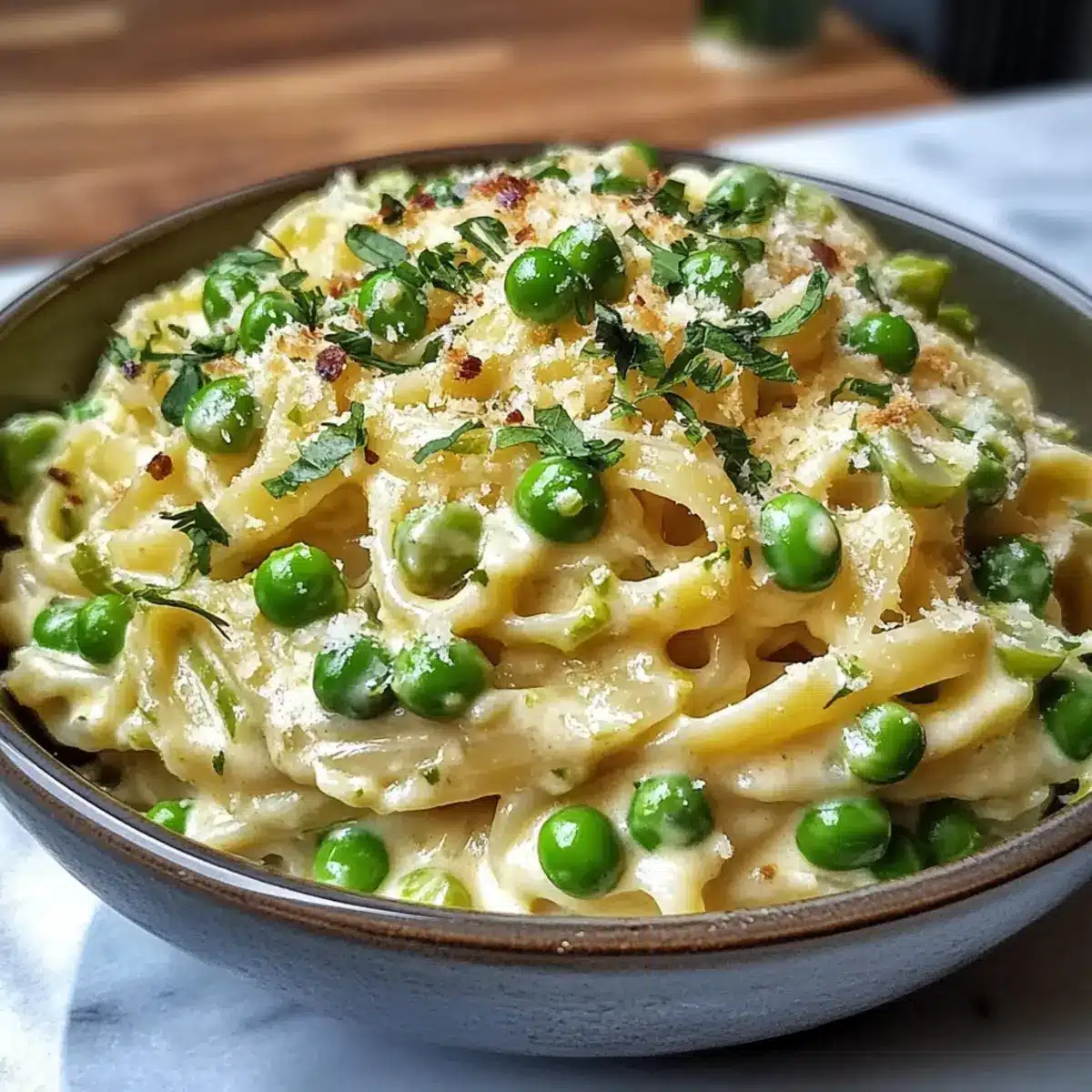
Creamy One-Pot Spring Vegetable Pasta Recipe FAQs
What kind of pasta should I use for spring vegetable pasta?
I recommend using short, ridged pasta like penne or fusilli. These shapes hold onto the creamy sauce better, ensuring every bite is deliciously coated!
How can I store leftover spring vegetable pasta?
After letting it cool, transfer your leftover spring vegetable pasta to an airtight container and refrigerate it for up to 3 days. Make sure it is sealed well to maintain its freshness and prevent it from drying out.
Can I freeze spring vegetable pasta?
Absolutely! For freezing, portion out the pasta into airtight containers or freezer bags. It can be stored in the freezer for up to 2 months. Just remember to leave some space in the container for expansion as it freezes.
What should I do if my pasta sauce is too thick?
If you find your sauce is thicker than desired, no worries! Simply add a splash of vegetable broth or cream and stir it in over low heat until you reach your preferred creaminess. This will help to achieve that dreamy texture you’re aiming for!
Are there dietary considerations for spring vegetable pasta?
This recipe can easily accommodate various dietary needs. For a dairy-free version, simply swap the cream with full-fat coconut milk and use nutritional yeast instead of Parmesan. Always check for allergies when selecting ingredients, particularly with the broth and any added seasonings.
Can I customize the vegetables in my spring vegetable pasta?
Very much so! You can mix and match depending on what’s fresh or available. Try adding zucchini, bell peppers, or even leafy greens like spinach. It’s all about using what you love—this recipe is as flexible as your fridge allows!
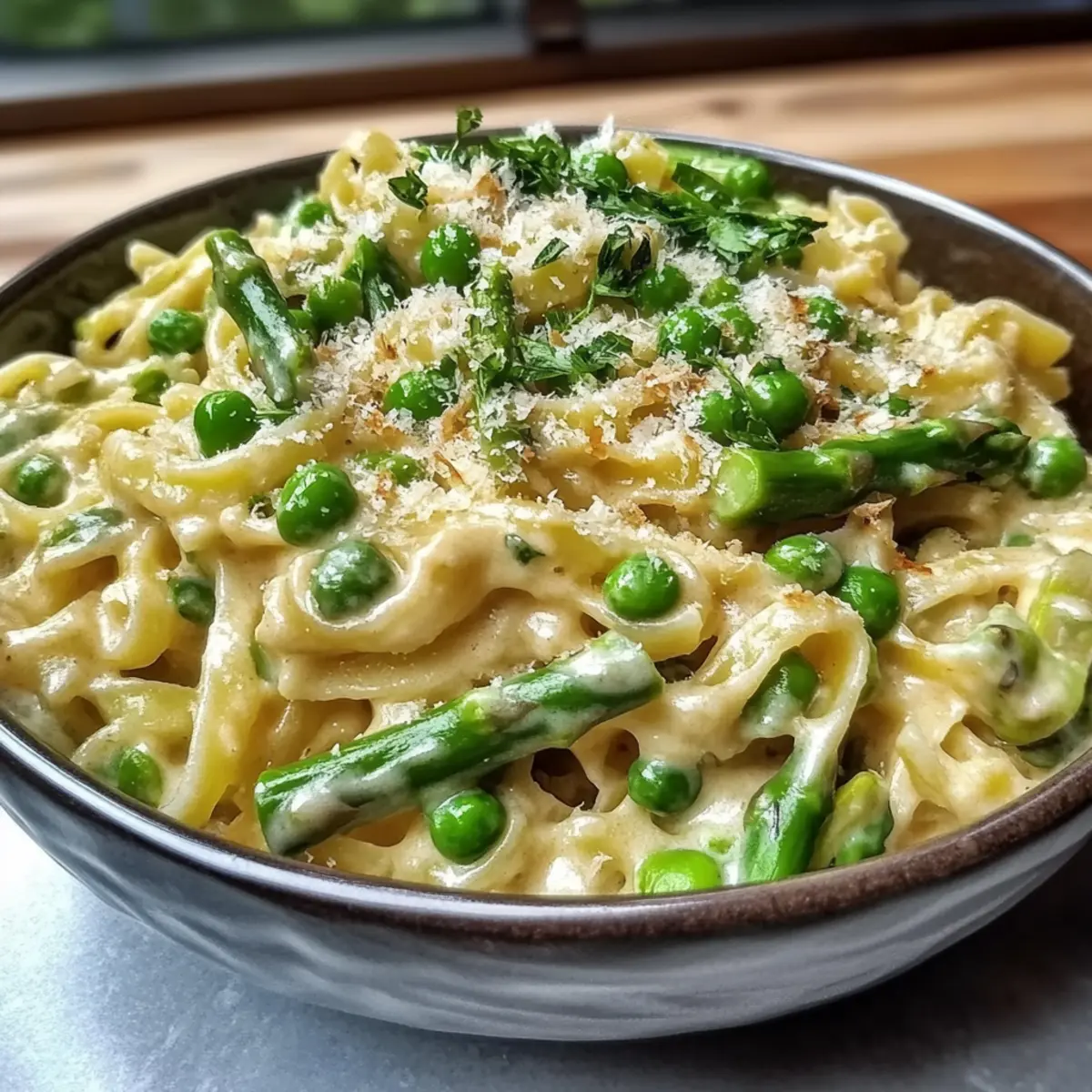
Creamy Spring Vegetable Pasta That's Bursting with Flavor
Ingredients
Equipment
Method
- Heat 2 tablespoons of olive oil in a large pot over medium heat. Add 2 minced garlic cloves and sauté for about 1–2 minutes until fragrant.
- Incorporate 8 ounces of short pasta and 4 cups of vegetable broth into the pot. Stir in chopped asparagus and bring to a boil.
- Allow the pasta to simmer for 10–12 minutes, stirring occasionally to prevent sticking.
- Reduce the heat to low and stir in 1 cup of cream or full-fat coconut milk along with ½ cup of grated Parmesan cheese.
- Gently fold in 1 cup of sweet peas, cooking for just 2-3 minutes.
- Serve hot, garnished with extra Parmesan cheese and a sprinkle of fresh herbs.
Leave a Reply