
As I stirred the vibrant mix of colors sizzling in my pan, I couldn’t help but smile at the delightful aroma wafting through the kitchen. Japchae, or Korean stir-fried sweet potato noodles, has a special place in my heart. This beloved dish is not just a feast for the eyes but also a comforting, wholesome meal that’s incredibly customizable. Whether you prefer tender beef, succulent chicken, or savory tofu, there’s a version of Japchae for everyone. Plus, with a gluten-free option available, it suits various dietary needs effortlessly. In roughly 30 minutes, you can elevate your dinner experience, turning a simple gathering into a festive celebration. So, are you ready to dive into this nutritious and satisfying dish that promises to impress your loved ones?
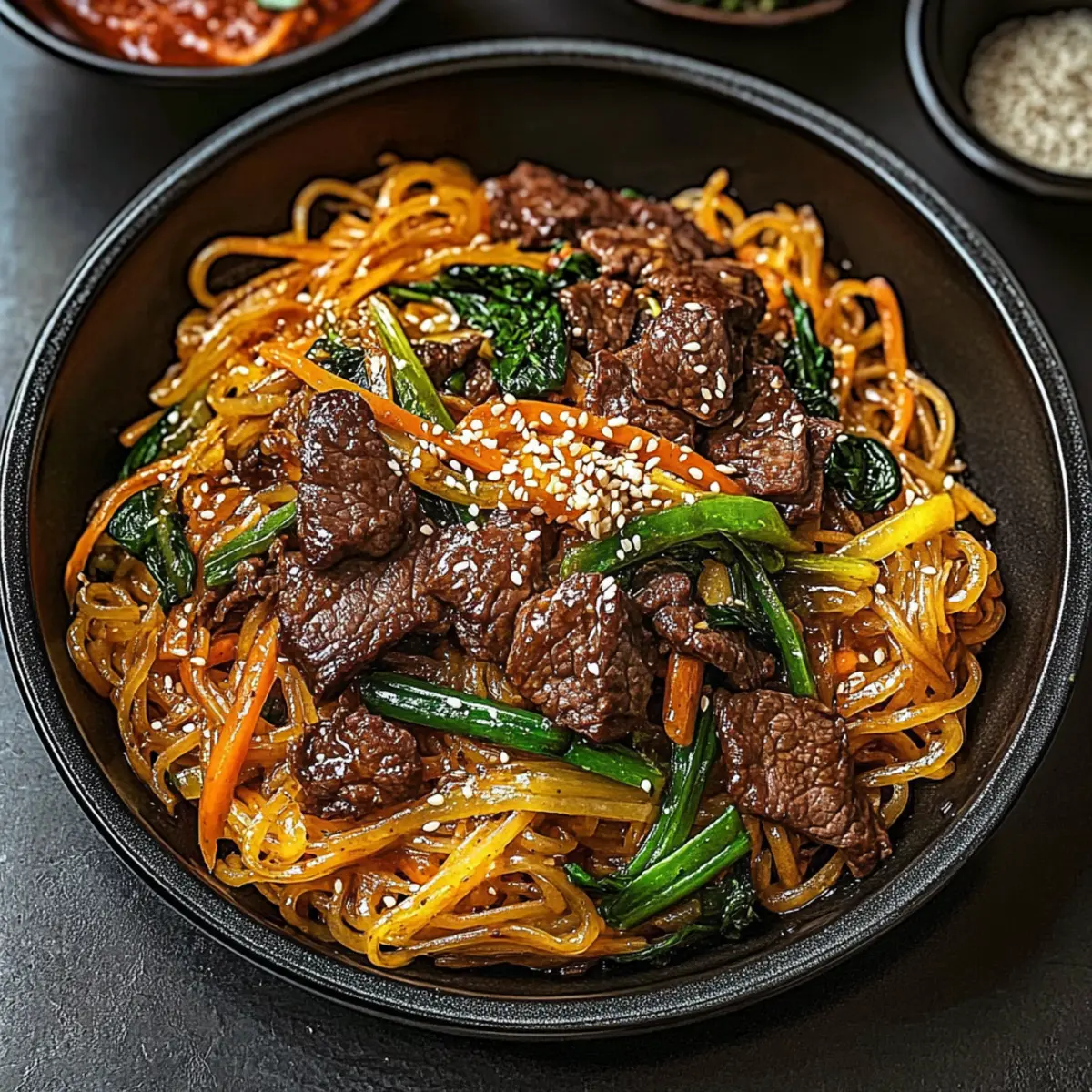
Why is Japchae a Must-Try?
Customizable Delight: Japchae’s beauty lies in its flexibility—swap proteins or vegetables to match your taste!
Quick Prep Time: Whip up this scrumptious dish in just 30 minutes, making it perfect for busy weeknights.
Nutrient-Packed: Featuring vibrant veggies and gluten-free noodles, it’s a nourishing meal everyone will enjoy.
Crowd-Pleaser: With its rich flavors and delightful presentation, Japchae is sure to impress at any gathering.
Comfort Food: Its warm, savory-sweet notes make it a hearty favorite that feels like a warm hug on a plate.
Dive into a world of flavor with your Japchae, and don’t forget to check out our tips on customizing your dish.
Japchae Ingredients
• • Discover the essentials for perfect Japchae!
For the Noodles
- Sweet Potato Glass Noodles – The key ingredient, offering a delightful chewy texture and entire dish’s gluten-free status.
For the Protein
- Beef (or Chicken/Tofu) – Adds richness; choose chicken or tofu for a lighter alternative that caters to various diets.
For the Vegetables
- Carrots – Brightens the dish with color and sweetness; can be julienned or sliced.
- Spinach – Adds a splash of green; provides essential vitamins and minerals.
- Bell Peppers – Bring crunch and vibrancy; feel free to use any color variety you love.
For the Sauce
- Soy Sauce – Essential for seasoning and delivering umami flavor; consider low-sodium soy sauce for a healthier twist.
- Sesame Oil – This adds a nutty aroma, enhancing the overall taste profile of the dish.
- Sugar (optional) – Balances the flavors; can be reduced or replaced with honey or agave syrup.
For the Garnish
- Green Onions – For a fresh finish; chives are a great substitute if you’re out of green onions.
Gather these ingredients and let’s get cooking! Your homemade Japchae will quickly become a favorite.
Step‑by‑Step Instructions for Japchae
Step 1: Prep the Noodles
Begin by soaking the sweet potato glass noodles in hot water for 30 minutes until they soften and become pliable. You’ll know they’re ready when they’re translucent and bend easily. Drain the noodles in a colander and set them aside, allowing any excess water to drip off while you prepare the other ingredients.
Step 2: Cook the Protein
In a large non-stick skillet or wok, heat a tablespoon of oil over medium-high heat. Add your choice of sliced beef, chicken, or tofu, and stir-fry for about 5-7 minutes until browned and cooked through. Keep stirring to ensure even cooking, then remove the protein from the pan and set it aside on a plate, keeping it warm.
Step 3: Sauté the Vegetables
In the same skillet, add a little more oil if needed and toss in julienned carrots, bell peppers, and spinach. Stir-fry the vegetables for about 5-7 minutes until they’re tender but still vibrant and crunchy. This colorful mix enhances the flavor and nutrition of your Japchae, so keep an eye on them for the best texture.
Step 4: Combine Ingredients
Once the vegetables are ready, reduce the heat to medium and return the cooked protein to the skillet. Next, add the soaked sweet potato noodles along with soy sauce, sesame oil, and optional sugar. Carefully toss everything together using chopsticks or tongs for about 3-5 minutes, ensuring all the ingredients are well-coated and heated through.
Step 5: Serve and Garnish
Once the ingredients are combined and heated, transfer your delicious Japchae to a serving platter or individual bowls. Garnish the dish with chopped green onions or chives for a fresh pop of flavor and color. Serve warm or at room temperature, and allow everyone to delight in this hearty, comforting meal!
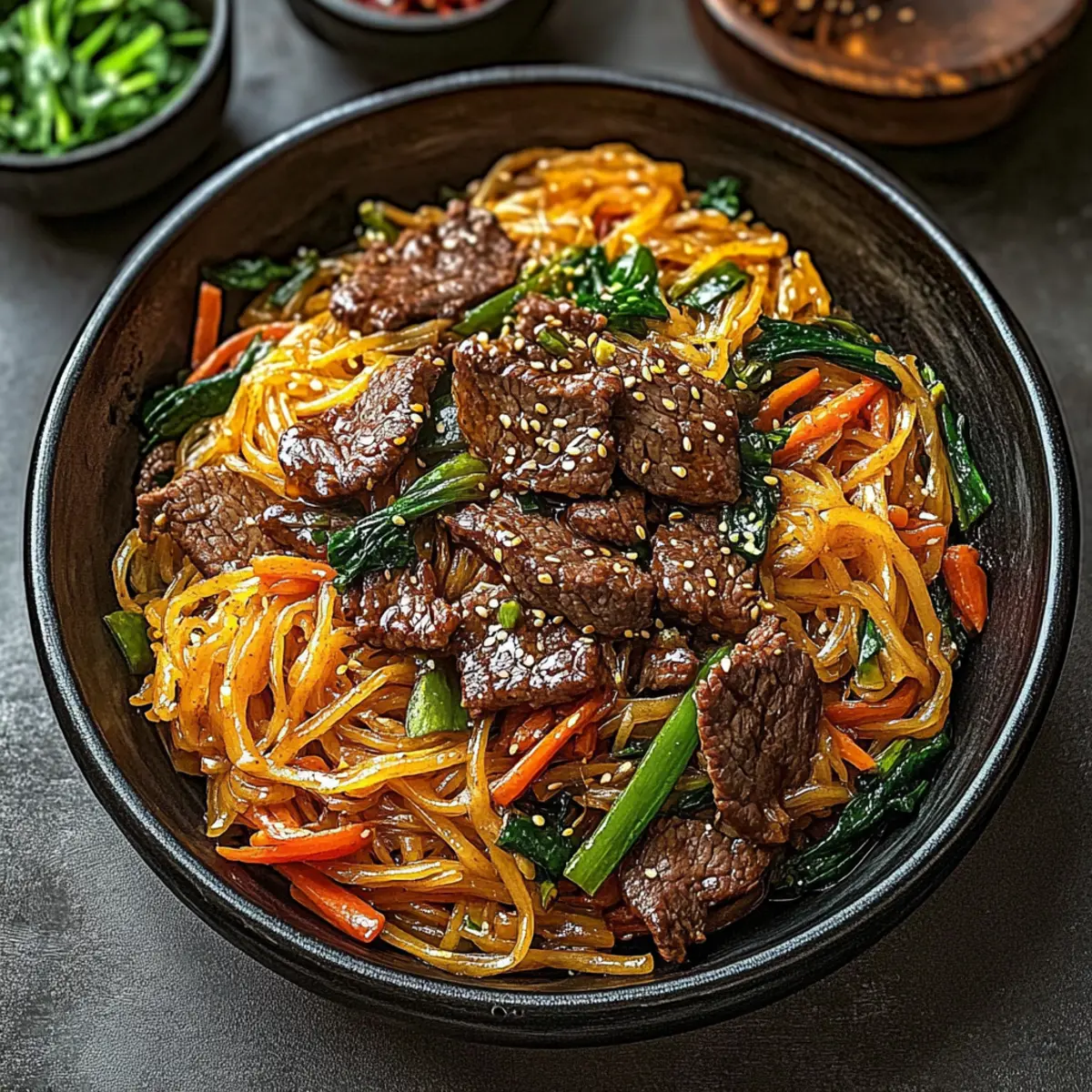
Expert Tips for Perfect Japchae
-
Noodle Consistency: Ensure the sweet potato noodles are soaked long enough to achieve that desired chewy texture; avoid overcooking them in the stir-fry.
-
Ingredient Freshness: Use fresh vegetables for the best flavor and nutrition; the crunchier, the better! Customize based on what’s in season or your preferences.
-
Protein Choice: Don’t be afraid to experiment! Try different proteins or even a combination to make your Japchae uniquely yours.
-
Flavor Balancing: Adjust the soy sauce and sugar to your taste; start with less and add more gradually to avoid overpowering the dish.
-
Serving Options: Japchae can be enjoyed warm or at room temperature, making it a fantastic dish for gatherings or meal prep. Enjoy your homemade Japchae!
What to Serve with Authentic Japchae?
Gather your loved ones around the table, as you create a vibrant spread that perfectly complements this mouthwatering stir-fried noodle dish.
- Kimchi: This spicy, fermented side adds a tangy kick that contrasts beautifully with the sweetness of the Japchae.
- Korean Fried Chicken: Crispy and tender, this dish brings a savory crunch that pairs harmoniously with the chewy noodles.
- Steamed Rice: Fluffy, white rice serves as a neutral base that balances Japchae’s rich flavors, making each bite thoroughly enjoyable.
- Sesame Spinach Salad: A refreshing side, this salad adds crunch and brightness, complementing Japchae’s warm, savory notes.
- Pickled Radish: The cool, crisp texture and tangy taste serve as a palate cleanser, enhancing the overall dining experience.
- Chrysanthemum Tea: This fragrant herbal tea provides a soothing finish, its floral notes beautifully offsetting the dish’s rich flavors.
Enjoy crafting a memorable meal that celebrates the delightful, customizable flavors of Japchae and brings joy to your table!
How to Store and Freeze Japchae
Fridge: Keep leftover Japchae in an airtight container for up to 3 days. The flavors often deepen over time, making it even more delicious!
Freezer: For long-term storage, freeze Japchae in portions for up to 2 months. Ensure it’s well-wrapped to prevent freezer burn for the best results.
Reheating: Thaw in the fridge overnight before reheating. Gently warm in a pan over low heat with a splash of water or soy sauce to revive its texture.
Room Temperature: If serving at room temperature, don’t leave Japchae out for more than 2 hours to ensure food safety. Enjoy every bite of this delightful dish!
Make Ahead Options
These Japchae are perfect for meal prep, making busy weeknights a breeze! You can soak and prepare the sweet potato glass noodles up to 24 hours in advance; just store them in an airtight container after draining to prevent sticking. Additionally, you can sauté the vegetables and cook your choice of protein (beef, chicken, or tofu) up to 3 days earlier. To maintain quality, refrigerate everything separately and toss them together just before serving. When it’s time to enjoy your Japchae, simply reheat the noodles, protein, and vegetables in a pan over medium heat for a few minutes, adding soy sauce and sesame oil to bring it all back to life—resulting in a delicious weeknight dinner in no time!
Japchae: Exciting Variations Await!
Feel free to customize your Japchae adventure with these delightful options that will tickle your taste buds!
-
Dairy-Free: Skip any cheese or cream; this dish is already rich and creamy from the sesame oil and flavors.
-
Gluten-Free: Use gluten-free soy sauce instead of regular to keep this dish safe for gluten-sensitive friends or family.
-
Spicy Twist: Stir in a teaspoon of gochujang or sliced fresh chili peppers for a spicy kick that brightens the dish.
-
Vegan Alternative: Replace beef or chicken with extra-firm tofu, and load up on seasonal veggies for a delicious plant-based twist.
-
Umami Boost: Add a splash of oyster sauce or mushroom soy sauce for an umami depth that will elevate the overall flavor profile.
-
Nutty Flavor: Throw in some toasted sesame seeds or chopped nuts like cashews to enhance the crunch and nutty aroma.
-
Exotic Veggies: Incorporate unique vegetables like shiitake mushrooms or bok choy to broaden the flavors while maintaining that comforting essence of Japchae.
-
Citrus Zest: A dash of fresh lime or lemon juice before serving can create a refreshing brightness that accentuates the dish beautifully.
Your culinary creativity knows no bounds, so dive into the world of flavor with your customized Japchae! If you enjoyed these ideas, don’t miss our tips on customizing your dish.
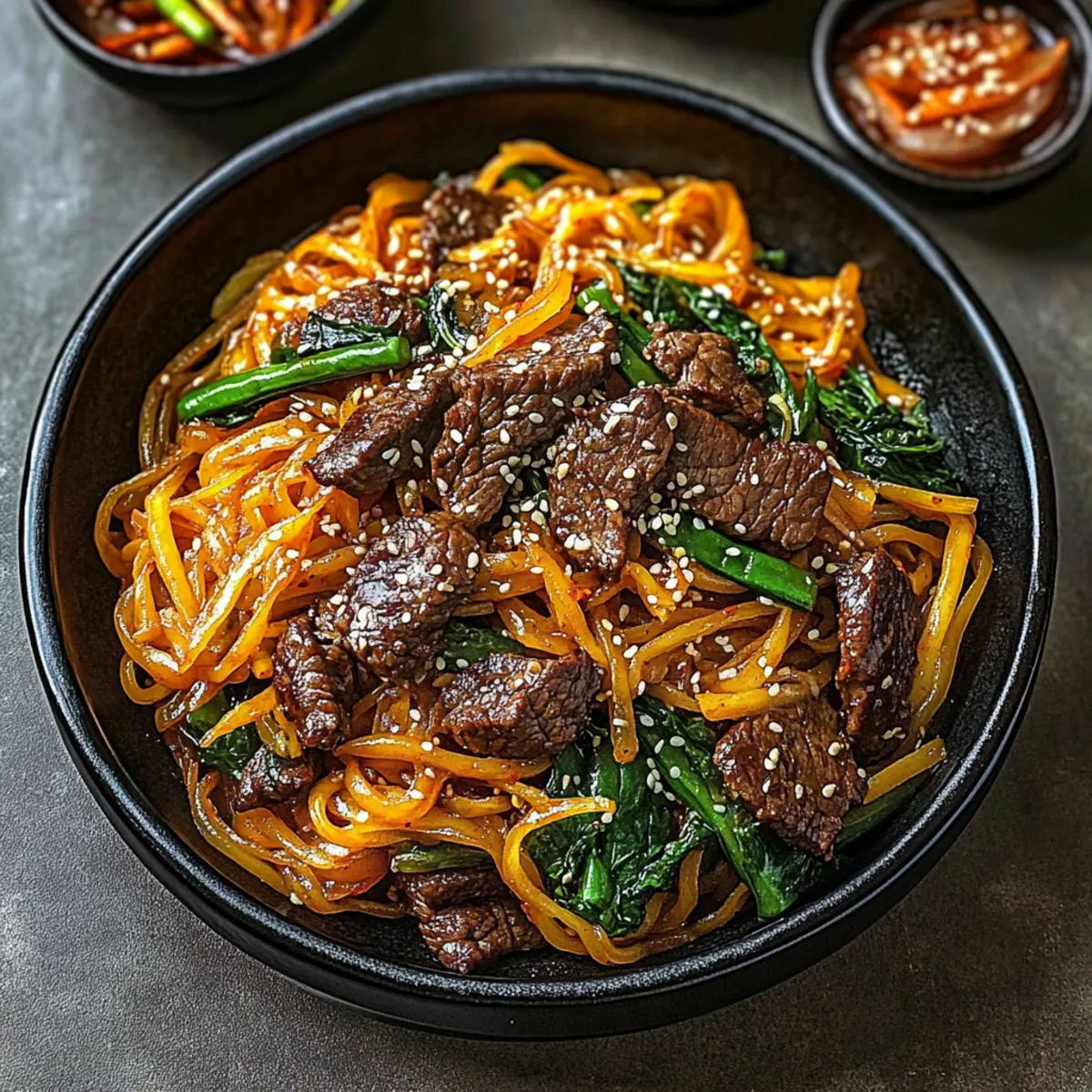
Japchae Recipe FAQs
What type of sweet potato noodles should I use for Japchae?
I recommend using traditional sweet potato glass noodles, which are naturally gluten-free and offer that delightful chewy texture. You can find them at most Asian grocery stores or in the international aisle of your local supermarket. If you can only find wheat noodles, those work too, but just keep in mind that they may not maintain the same unique texture.
How do I store leftover Japchae?
Store any leftover Japchae in an airtight container in the refrigerator for up to 3 days. I often find that the flavors deepen and improve over time, making it an even more enjoyable meal the next day! When you’re ready to eat, just reheat it gently in a pan on the stove or in the microwave.
Can I freeze Japchae for later use?
Yes, absolutely! You can freeze Japchae in portions for up to 2 months. Make sure to place it in airtight containers or freezer bags, removing as much air as possible to prevent freezer burn. When you’re ready to enjoy it, thaw in the fridge overnight, then reheat gently in a pan with a splash of soy sauce or water to maintain a good texture.
What if I want to customize the vegetables in my Japchae?
The more the merrier! You can absolutely customize your Japchae with seasonal veggies or whatever you have on hand. Aside from the classic carrots, spinach, and bell peppers, consider adding mushrooms, zucchini, or broccoli. Just be sure to cook the vegetables until they’re still vibrant and tender, which will boost both the nutrition and presentation of the dish.
Does Japchae contain any common allergens?
Yes, while Japchae can be made gluten-free with the right soy sauce, it does contain sesame oil, which can be an allergen for some individuals. Always double-check your ingredient labels, especially for soy sauce, as some brands may contain wheat. If you’re cooking for someone with particular allergies or dietary restrictions, feel free to swap out ingredients as needed.
How can I enhance the flavor of my Japchae?
If you’re looking to elevate the flavor profile, consider adding a bit of gochujang or chili paste for a spicy kick. Start with a small amount and add more to taste to avoid overwhelming the dish. You can also try experimenting with fresh herbs like cilantro or adding toasted sesame seeds before serving for an added depth of flavor and texture.
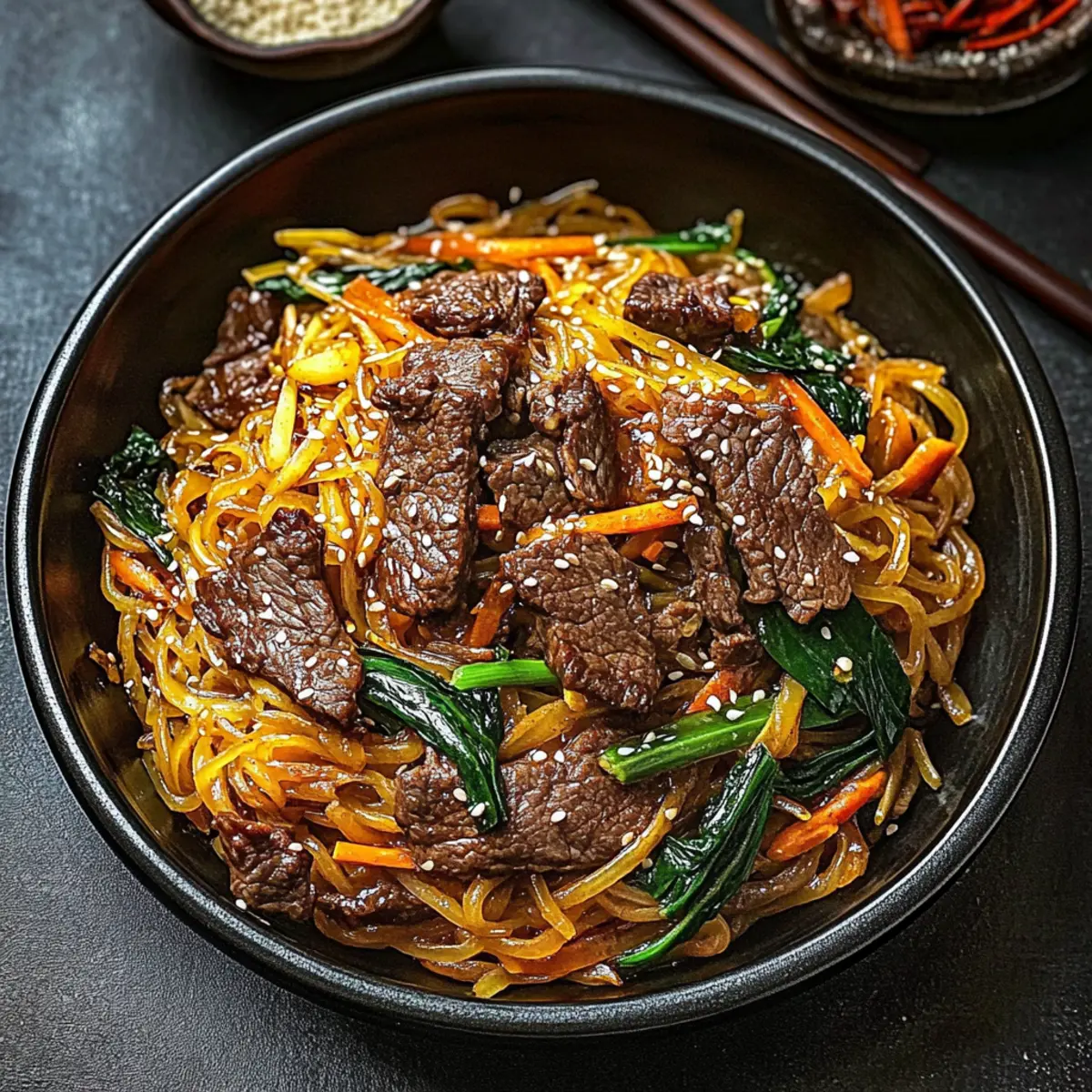
Delicious Japchae: Easy Korean Noodles You’ll Love
Ingredients
Equipment
Method
- Begin by soaking the sweet potato glass noodles in hot water for 30 minutes until they soften and become pliable. Drain the noodles in a colander and set them aside.
- In a large non-stick skillet, heat a tablespoon of oil over medium-high heat. Add your choice of sliced beef, chicken, or tofu, and stir-fry for about 5-7 minutes until browned.
- In the same skillet, add a little more oil if needed and toss in julienned carrots, bell peppers, and spinach. Stir-fry for about 5-7 minutes until tender but still vibrant.
- Once the vegetables are ready, reduce the heat to medium and return the cooked protein to the skillet. Add the soaked sweet potato noodles along with soy sauce, sesame oil, and optional sugar. Toss everything together for about 3-5 minutes.
- Transfer your delicious Japchae to a serving platter. Garnish with chopped green onions or chives and serve warm or at room temperature.
Leave a Reply