
As I was tidying up my kitchen one evening, I stumbled upon a bounty of colorful vegetables, just waiting to be transformed into something delightful. That’s when I decided to whip up some Vegetable Gimbap—Korean rice rolls that turn simple ingredients into a vibrant, wholesome meal. These rolls are not only visually stunning, but they also pack a nutritious punch, allowing you to customize fillings based on what you already have on hand. Whether you’re looking for a quick snack or a fun new dish to impress your friends, this easy recipe is perfect for both novice and seasoned chefs alike. With just a little prep time, you’ll have a fresh, satisfying treat that can cater to any dietary preference. Ready to roll? Let’s dive into this delicious adventure!
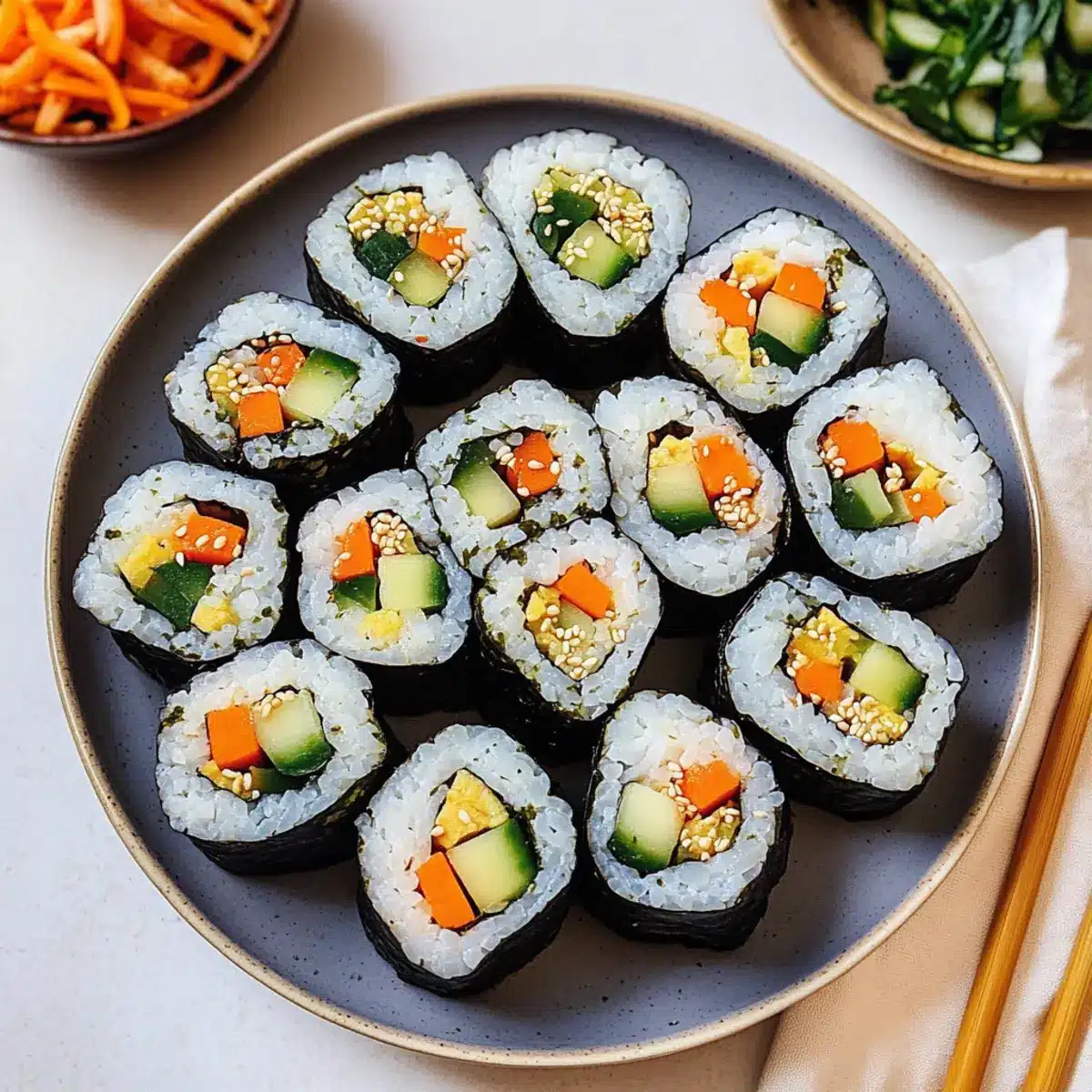
Why Try This Vegetable Gimbap Recipe?
Simplicity at its finest: The process is incredibly straightforward, making it perfect for home cooks of all skill levels.
Customization: With endless filling options—vegetables, omlettes, or even sautéed meat—you can easily tailor this dish to your taste preferences, making it versatile for any meal.
Flavor-packed: Each bite combines fresh, vibrant veggies with the rich nuttiness of sesame oil, offering a satisfying and delightful taste experience.
Perfect picnic food: Gimbap is an ideal snack for enjoying outdoors or as a quick, healthy lunch, adding a touch of fun to your dining repertoire.
Quick and easy: Ready in under an hour, this recipe saves you time without compromising quality, allowing you to enjoy homemade goodness without the fuss.
Healthy and balanced: Rich in fiber and nutrients, this gimbap offers a guilt-free indulgence that fuels your body, perfect for those aiming for healthier eating.
Dive deeper into the heart of Korean cuisine with this delightful twist on a classic!
Vegetable Gimbap Ingredients
For the Rice
- Short-grain sushi rice – Use this type for the perfect chewy texture that holds the rolls together.
- Sesame oil – This is essential for flavor and that signature glossy finish on your gimbap.
For the Fillings
- Carrot – Slice into long, thin strips for a crunchy texture; bell peppers make a delightful substitute.
- Swiss Chard stalks – Cut into matchsticks to add freshness and color; feel free to use any crunchy veggies available.
- Persian cucumber – Offering a refreshing crunch, slice lengthwise into wedges; pickled cucumber provides a tasty tangy alternative.
- Spinach – Sauté to reduce water content; you can also swap it with other leafy greens like kale for variety.
- Egg (or tofu) – For richness, prepare as an omelette and slice; tofu makes this dish a great plant-based option.
For Assembly
- Seaweed sheets (Nori) – An essential for wrapping your rolls, providing structure and flavor for your Vegetable Gimbap.
This vegetable gimbap recipe is super customizable, allowing you to make it your own while enjoying a nutritious, tasty treat!
Step‑by‑Step Instructions for Vegetable Gimbap
Step 1: Cook and Season Rice
Begin by rinsing 2 cups of short-grain sushi rice under cool water until the water runs clear. Cook the rice in a rice cooker or pot with the appropriate water-to-rice ratio. Once cooked, let it steam for another 10 minutes. Transfer the hot rice to a bowl and gently fold in 2 tablespoons of sesame oil and a pinch of salt. Keep the rice covered and warm as you prepare the fillings.
Step 2: Prepare Fillings
While the rice is cooking, wash and slice the carrot, Swiss chard stalks, and Persian cucumber. Cut the carrot and Swiss chard into long, thin strips for easy rolling. Slice the cucumber lengthwise to create wedges. Additionally, whisk 2 eggs and cook them in a lightly oiled skillet over medium heat until set, then slice into strips. Set all your colorful fillings aside to assemble your Vegetable Gimbap.
Step 3: Sauté Vegetables
In a large skillet, add a tablespoon of oil over medium heat. Add the sliced carrots and sauté for about 3 minutes until they start to soften but retain some crunch. Remove them from the skillet and set aside. In the same skillet, add a bit more oil if needed and toss in the spinach. Sauté for 2-3 minutes until wilted, then remove and let cool. Your sautéed vegetables will add great flavor to the gimbap.
Step 4: Assemble Rolls
Lay one sheet of seaweed on a bamboo sushi mat, shiny-side down. Using wet hands, spread a thin layer of the seasoned rice over about 80% of the seaweed sheet, leaving the top edge clear for sealing. Line the edge closest to you with a mix of your prepared fillings: carrots, Swiss chard, cucumber, spinach, and egg. This is your chance to creatively arrange the colorful fillings.
Step 5: Roll and Seal
Starting from the edge with the fillings, grasp the bamboo mat and begin rolling gently yet firmly away from you. Keep the gimbap tight but not overly compressed, using the mat to guide you. Once rolled, use a little water on the top edge of the seaweed to seal the roll. Continue rolling until the seaweed is securely closed, forming a beautiful Vegetable Gimbap.
Step 6: Cut and Serve
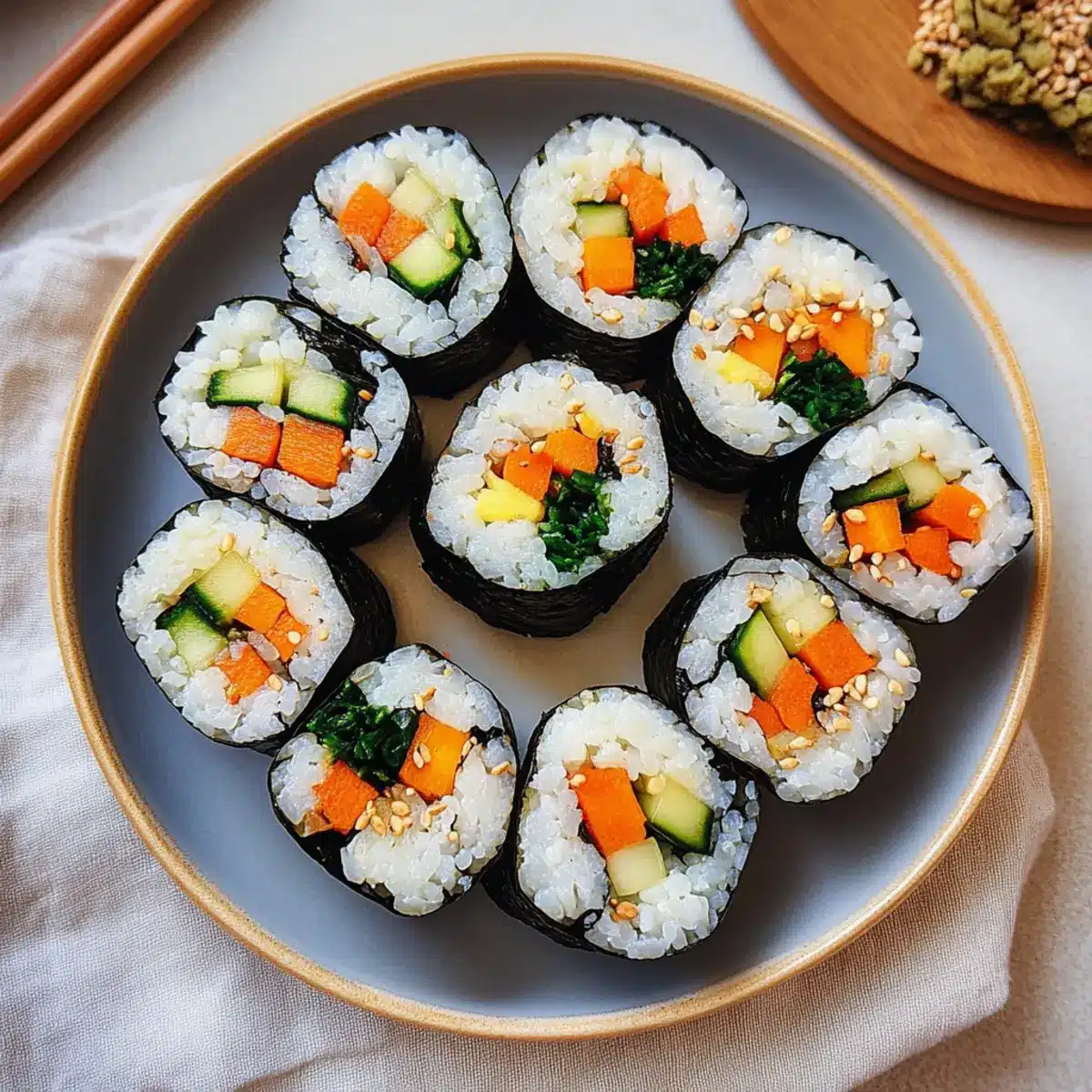
Using a sharp knife dipped in water, slice the gimbap into 8-10 bite-sized pieces. The water will help prevent sticking. Arrange the slices carefully on a platter and brush with a little sesame oil for extra flavor and shine. For an added touch, sprinkle some sesame seeds on top. Your Vegetable Gimbap is now ready to be enjoyed as a fresh, vibrant snack!
Make Ahead Options
These delicious Vegetable Gimbap are perfect for meal prep enthusiasts! You can prepare your rice and fillings up to 24 hours in advance to save time on busy weeknights. Simply cook and season the rice, then store it in an airtight container in the fridge. Slice your vegetables and sauté them as needed, letting them cool before refrigerating, which helps maintain their crunch. When you’re ready to enjoy, assemble the rolls with the prepped ingredients, rolling them tightly for the best results. Just slice and serve for a fresh, satisfying snack that’s just as delicious as when made fresh!
Vegetable Gimbap: Fun Variations Await
Feel free to let your culinary creativity shine as you personalize this delicious gimbap recipe in ways that excite your palate!
-
Colorful Crunch:
Combine a variety of vegetables like bell peppers, radishes, or zucchini for an extra crunch and vibrant color in each roll. -
Meat Lovers:
For added protein, include thin strips of grilled chicken, beef, or salmon, transforming your gimbap into a satisfying meal option. -
Vegan Delight:
Swap out eggs for a chickpea omelette or silken tofu, ensuring your gimbap remains completely plant-based while retaining richness. -
Spicy Kick:
Add a thin layer of gochujang (Korean chili paste) or sriracha to the rice for a delightful heat that warms the soul. -
Fresh Herbs:
Enhance flavor with fresh herbs like cilantro or mint to give your gimbap a fragrant twist, providing freshness and brightness. -
Creamy Avocado:
Incorporate slices of creamy avocado for a smooth texture and added richness that pairs beautifully with the other fillings. -
Pickle Perfection:
Add pickled vegetables, like radish or carrots, for that delightful tang that elevates the flavors and contrasts with the rice. -
Garlic Infusion:
Sauté your vegetables in garlic-infused oil for an aromatic twist, making the familiar taste of gimbap feel new and exciting.
These thoughtful variations not only keep gimbap exciting but are also a great way to use whatever you have on hand. Try pairing it with pickled vegetables or a light dipping sauce for an unforgettable bite!
What to Serve with Easy Korean Gimbap
Enhance your dining experience by pairing these delightful rolls with complementary dishes that elevate their fresh flavors.
-
Spicy Kimchi: A tangy, fermented dish that adds heat and depth, balancing the mildness of the gimbap.
-
Crispy Tempura Vegetables: Provides a crunchy contrast with a hint of sweetness that harmonizes beautifully with the soft rice and fillings.
-
Sesame Soy Dipping Sauce: A zesty sauce to dip your gimbap pieces into, amplifying the umami with a delicious twist.
-
Pickled Daikon Radish: Its sharp acidity cuts through the richness of the rolls, offering a zesty cleanse for your palate.
-
Miso Soup: Warm and comforting, this soup lends a savory depth that pairs well with the soft texture of gimbap.
-
Fresh Salad with Sesame Dressing: A light and refreshing option that introduces crisp greens and nutty flavors, complementing each bite perfectly.
-
Fruit Skewers: Sweet, juicy bites of seasonal fruits bring a vibrant end to your meal, adding a refreshing sweetness following the savory rolls.
-
Iced Green Tea: Refreshing and slightly bitter, this drink brings balance to the flavors while keeping you cool during warm days.
Your Vegetable Gimbap will shine even brighter with these delectable accompaniments!
Expert Tips for Vegetable Gimbap
Uniform Cuts: Ensure all vegetables are cut to similar sizes; this helps with even cooking and makes rolling simpler.
Rice Texture: Don’t skip rinsing the rice; this removes excess starch, preventing the rice from becoming gummy and ensuring a perfect texture in your vegetable gimbap.
Rolling Technique: Use a bamboo mat for easier rolling, and be sure to apply gentle pressure to keep the rolls tight without squishing the fillings out.
Slicing Strategy: When slicing the finished rolls, use a damp knife; this prevents sticking and gives you a clean cut that showcases your beautiful vegetable gimbap.
Flavor Boost: Lightly brush the outside of the rolls with sesame oil before serving—it adds flavor and enhances the sheen, making your dish even more inviting.
How to Store and Freeze Vegetable Gimbap
Fridge: Store leftover gimbap in an airtight container in the fridge for up to 24 hours. Keep them wrapped in cling film to prevent the rice from hardening.
Freezer: For longer storage, wrap individual gimbap rolls tightly in plastic wrap, then place them in a freezer-safe bag. They can be kept frozen for up to 2 months.
Reheating: When ready to enjoy, thaw in the fridge overnight. Reheat in a microwave on low power for about 20 seconds or until warmed through.
Best Practice: Gimbap is best enjoyed fresh, but if you need to store it, these tips will help maintain its delicious flavor and texture.
Vegetable Gimbap Recipe FAQs
What type of rice is best for making gimbap?
Absolutely! For the best texture, use short-grain sushi rice. Its starch content helps achieve the chewy consistency that holds the rolls together perfectly.
How do I store leftover gimbap?
Gimbap is best enjoyed fresh, but if you have leftovers, store them in an airtight container in the fridge for up to 24 hours. Wrap each roll in cling film to prevent the rice from hardening and losing its delightful texture.
Can I freeze vegetable gimbap?
Yes, you can! To freeze, wrap each individual gimbap roll tightly in plastic wrap, ensuring no air gets in. Place them in a freezer-safe bag and freeze for up to 2 months. When you’re ready to enjoy, thaw them in the refrigerator overnight, then reheat in a microwave on low for about 20 seconds.
What if my vegetables are too wet when making gimbap?
Good question! If your vegetables are very watery, lightly sauté them until they release excess moisture. For leafy greens like spinach, make sure to sauté until they are fully wilted and dry before adding them to the rolls. This prevents sogginess and keeps each bite fresh and enjoyable.
Are there any allergy considerations I should be aware of?
Very! If you’re preparing gimbap for a diverse group, be mindful of common allergens like eggs (if not using a plant-based alternative) and sesame oil. You can easily make the recipe vegan by substituting tofu for egg, ensuring the meal is adaptable to various dietary needs.
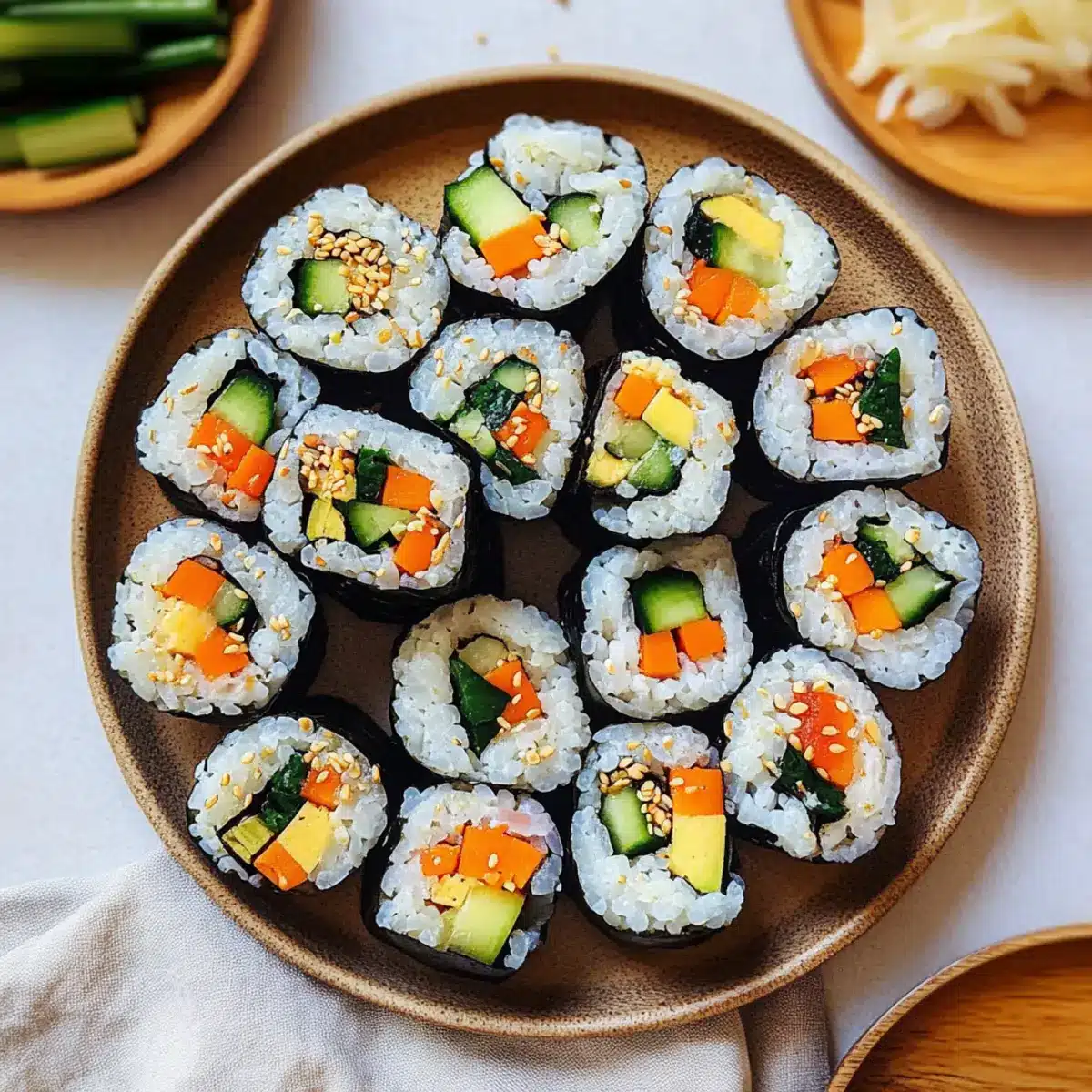
Delicious Vegetable Gimbap: A Tasty Twist on Korean Snacks
Ingredients
Equipment
Method
- Rinse short-grain sushi rice under cool water until the water runs clear. Cook according to instructions. Let it steam for 10 minutes, then fold in sesame oil and salt.
- Wash and slice carrot, Swiss chard, and Persian cucumber. Prepare eggs as an omelette and slice into strips.
- In a skillet, heat oil and sauté carrots for 3 minutes. Set aside. Sauté spinach for 2-3 minutes until wilted.
- Lay a sheet of seaweed on a bamboo mat, spread rice leaving top edge clear, and line with prepared fillings.
- Roll the gimbap tightly using the mat, sealing with water on the top edge.
- Slice the rolled gimbap into 8-10 pieces using a damp knife and serve.
Leave a Reply