
As I stood in my kitchen, surrounded by vibrant colors and tantalizing aromas, I couldn’t help but feel a wave of excitement for what I was about to create: the Ultimate Hummus Platter. This delightful dish is as visually stunning as it is delicious, with creamy homemade hummus and an array of crunchy, fresh vegetables. Perfect for gatherings or a healthy snack, the homemade hummus platter has the added benefit of being customizable to suit every taste. With versions like traditional plain, nutty pine nut, and the sweet vibrancy of beet hummus, there’s something for everyone to enjoy. If you’re looking to elevate your snack game and impress your friends or family, this platter is just what you need! Are you ready to dive into a world of flavor and color?
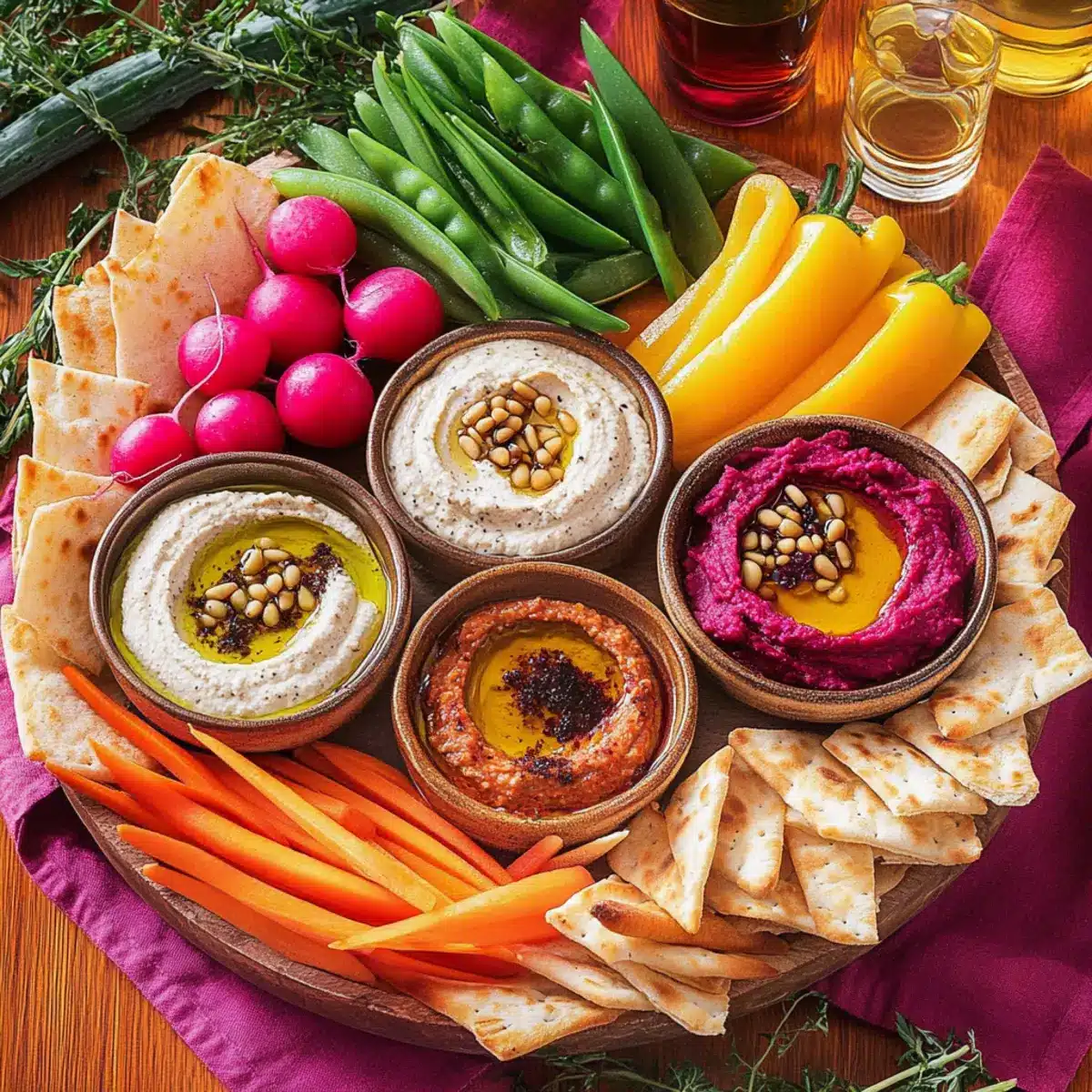
Why is our Homemade Hummus Platter a must-try?
Colorful and Inviting: This vibrant platter is a feast for the eyes, thanks to the medley of colorful vegetables paired with creamy hummus.
Customizable to Your Taste: With options like plain, pine nut, and beet hummus, everyone at your table can find a favorite.
Healthy & Hearty: Packed with protein and fiber, this dish makes for a satisfying snack without the guilt.
Perfect for Any Occasion: Whether it’s game night, a casual gathering, or a fancy dinner, this platter fits right in—guaranteed to impress your guests!
Ready to try something new? Check out our tips for creating a stunning vegetable platter to serve alongside your hummus!
Homemade Hummus Platter Ingredients
• This delightful spread features an array of delicious ingredients for a customizable experience.
For the Hummus
- Plain Hummus – The essential dip on your platter; can be store-bought or homemade for freshness.
- Pine Nut Hummus – Adds a rich, nutty flavor; consider blending in roasted pine nuts for extra crunch.
- Beet Hummus – Infuses sweetness and vibrant color; opt for store-bought or make your own from roasted beets.
For the Veggies
- Red Bell Pepper – Provides freshness and sweetness; slice into strips for easy dipping.
- Yellow Bell Pepper – Brightens up the platter with mild flavor; cut into bite-sized pieces.
- Carrots (Orange, Yellow, Purple) – Sweet and crunchy; cut into sticks to create a colorful display.
- Radishes – Offer a spicy crunch; halve for easier handling and a pop of color.
- Snap Peas – Crisp and tender; slice them lengthwise for a refreshing crunch.
- Persian Cucumbers – Refreshing and mild; quarter them to enhance your bites.
- Celery – Adds crunch; trim and halve for manageable dipping.
- Cherry Tomatoes – Sweet and juicy; leave them on the vine for an elegant look.
For Dipping
- Mini Pitas – The perfect companion for hummus; serve whole or cut into triangles for sharing.
- Pita Chips – Crunchy and delightful; a fantastic alternative for extra crunch.
For Topping & Garnish
- Extra-Virgin Olive Oil – Drizzle over hummus for an added depth of flavor.
- Lemon Slices – Brighten up the hummus and enhance its zest; utilize for garnish.
- Pine Nut Mixture/Pesto – Optional blend for a flavor boost; consider it for an extra pop of taste.
- Chopped Canned Beets – Optional topping for that striking beet hummus.
With this homemade hummus platter, you can craft a colorful and delicious snacking experience that everyone will love!
Step‑by‑Step Instructions for Homemade Hummus Platter
Step 1: Prepare the Hummus
Begin by placing your chosen hummus varieties in separate bowls. For the plain hummus, drizzle a tablespoon of extra-virgin olive oil over the top and garnish with fresh lemon slices for a vibrant look. If you’re opting for homemade, blend chickpeas, tahini, garlic, lemon juice, and seasonings until creamy, which should take about 2-3 minutes on high speed.
Step 2: Add Pine Nut Hummus
Next, transfer the pine nut hummus to its own bowl. To elevate its flavor, sprinkle a handful of roasted pine nuts on top—you’ll want them to be lightly toasted for that delicious crunch. Set this bowl aside, making sure it’s well presented, as this will add a nutty contrast to your homemade hummus platter.
Step 3: Create Beet Hummus
For the third bowl, spoon in the beet hummus. If you’re making this at home, blend roasted beets with chickpeas, lemon juice, and tahini until smooth. Once in the bowl, add a few chopped canned beets on top for a striking splash of color, enhancing both visuals and flavor for your vibrant homemade hummus platter.
Step 4: Assemble the Hummus Bowls
Arrange the three bowls of hummus—plain, pine nut, and beet—beautifully in the center of a large serving board or platter. Ensure they are spaced out evenly, creating a focal point for your homemade hummus platter. This setup will entice your guests while providing easy access to each variety.
Step 5: Prepare the Vegetables
Now, artistically arrange your colorful vegetables around the hummus bowls. Slice the red and yellow bell peppers, halve the radishes, and cut the cucumber into quarters. Make sure each vegetable type is grouped together; this not only enhances the aesthetic but also provides easy dipping options.
Step 6: Add Crunchy Dippers
In the gaps left on your platter, place mini pitas and pita chips. You can leave the mini pitas whole or cut them into triangles to facilitate dipping. These crunchy dippers contrast beautifully with the creamy texture of your hummus, enhancing the overall experience of the homemade hummus platter.
Step 7: Garnish and Serve
Finally, drizzle any remaining extra-virgin olive oil over the hummus for a glossy finish, and sprinkle optional toppings like a pine nut mixture or fresh herbs for extra flair. Garnish with lemon wedges around the edges for a fresh pop of color. Your delightful homemade hummus platter is now ready to be enjoyed!
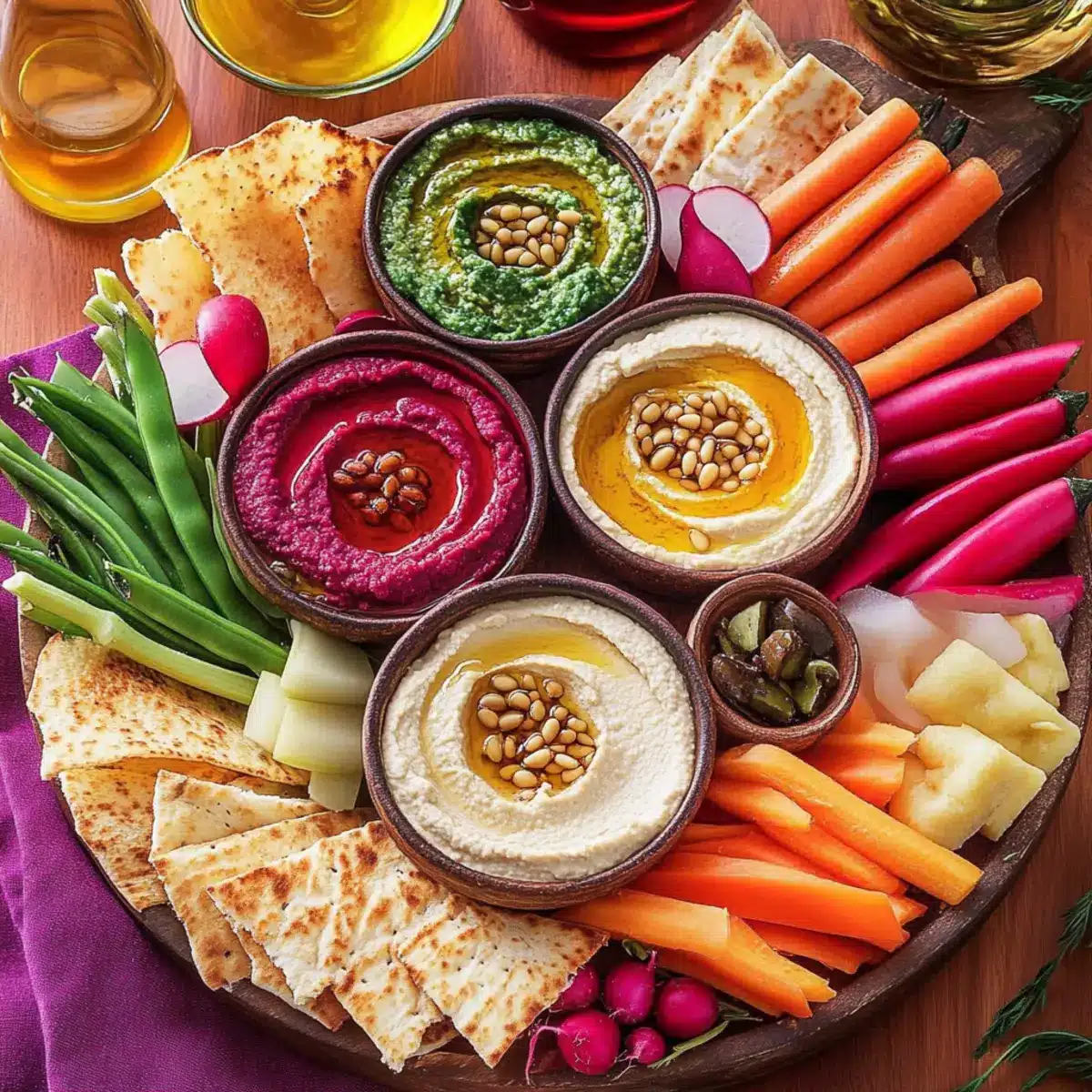
How to Store and Freeze Homemade Hummus Platter
- Fridge: Store leftover hummus in an airtight container for up to 1 week. This keeps the flavors fresh while the assorted veggies should be consumed within 3-4 days to maintain crispness.
- Freezer: Hummus can be frozen for up to 3 months. Place it in an airtight container or freezer bag, leaving some space for expansion. Thaw in the fridge overnight before enjoying.
- Veggies: For prepped vegetables, store them in a sealed container with a damp paper towel to maintain freshness. They’ll stay crunchy for up to 3 days.
- Reheating: If you’re using frozen hummus, never microwave directly from the freezer. Thaw first, then you can gently reheat it on the stove or in the microwave for the best texture.
What to Serve with Ultimate Hummus Platter?
Transform your homemade hummus platter into a complete culinary experience with these delectable pairings!
-
Creamy Feta Dip: A tangy complement that offers a thick, creamy texture. Perfect when paired with crunchy veggies for a flavor explosion.
-
Mediterranean Quinoa Salad: Bursting with flavors from herbs and spices, this hearty salad provides a nutty base that ties beautifully with the hummus.
-
Stuffed Grape Leaves: The savory, vinegary bite of these stuffed delicacies enhances the richness of the hummus, making each bite an adventure.
-
Olive Tapenade: This briny and savory spread adds depth to your platter, providing a beautiful contrast to the mildness of the hummus.
-
Grilled Vegetable Skewers: Charred smoky veggies bring an additional layer of flavor and a hint of warmth, uplifting the fresh, cool taste of the platter.
-
Herbed Pita Bread: Soft, warm pita infused with herbs pairs perfectly with the creamy dips and adds a comforting, freshly-baked element to your spread.
-
Honey-Tahini Drizzle: A sweet and nutty touch, this drizzle can be added over veggies or hummus, creating a delightful contrast and taking flavors to the next level.
-
Sparkling Lemonade: A refreshing drink that offers a zesty spark, which beautifully enhances the savory elements in your platter.
-
Baklava: For a savory-sweet finish, this rich dessert adds a touch of sweetness that harmonizes with the platter’s flavors while ending the meal on a delightful note.
Each pairing adds its unique charm, ensuring your homemade hummus platter becomes the highlight of your gathering!
Make Ahead Options
These delightful homemade hummus platters are perfect for busy weeknights and meal prep enthusiasts! You can prepare the hummus varieties—plain, pine nut, and beet—up to three days in advance. Simply store them in airtight containers in the refrigerator to maintain their creamy texture. The cut vegetables can also be prepped and kept fresh by wrapping them in a damp paper towel and sealing them in a container, which helps preserve their crunch for up to 24 hours. When you’re ready to serve, simply arrange everything on your platter, drizzle with olive oil, and garnish with lemon slices for a vibrant presentation that’s just as delicious as if you made it all at once!
Expert Tips
-
Smooth Hummus: Rinse canned chickpeas thoroughly before blending; it prevents a gritty texture in your homemade hummus platter.
-
Vibrant Veggies: Choose a variety of colors for your vegetables; they not only enhance the look but also invite everyone to dig in.
-
Creative Pairings: Don’t hesitate to mix and match your hummus varieties—combining flavors like beet and pine nut can create a delightful twist.
-
Prep Ahead: Slice your veggies and prepare the hummus a few hours in advance; it allows flavors to meld and saves time during serving.
-
Garnish Well: A drizzle of olive oil and a sprinkle of herbs or pine nuts can elevate the visual appeal of your homemade hummus platter!
Variations & Substitutions for Homemade Hummus Platter
Feel free to explore these delightful twists and adjustments, making the hummus platter uniquely yours!
-
Spicy Hummus: Add a teaspoon of cayenne pepper or chili flakes to your plain hummus for a fiery kick. Your guests will love this unexpected heat that dances on the palate.
-
Roasted Garlic Hummus: Swap raw garlic for roasted garlic cloves in your hummus. This will create a sweeter, milder depth of flavor, making for a cozy companion to your veggies.
-
Herbed Hummus: Blend in fresh herbs like basil, cilantro, or dill into your hummus. This adds a refreshing and aromatic layer, making each dip feel vibrant and alive.
-
Smoky Hummus: Incorporate smoked paprika or chipotle powder for a deeper flavor. The smokiness is a wonderful contrast, perfect for those who enjoy a bit of adventure in their snacking.
-
Nut-Free Version: Use sunflower seed butter instead of tahini in your hummus for a nut-free alternative. This keeps it creamy while accommodating those with nut allergies.
-
Veggie Variations: Opt for seasonal veggies, like asparagus in spring or zucchini in summer, bringing an ever-changing ensemble to your platter. Each new addition can highlight the freshness of the season.
-
Mediterranean Twist: Incorporate olives or crumbled feta on your platter for added brininess. These toppings elevate the whole experience, making it feel like a true Mediterranean feast.
-
Fruit Addition: Consider adding some slices of apple or pear. Their natural sweetness contrasts beautifully with the savory hummus, creating a wonderful flavor balance.
Ready to enhance your platter? Check out our guide on creating beautiful vegetable arrangements to make each bite even more tempting!
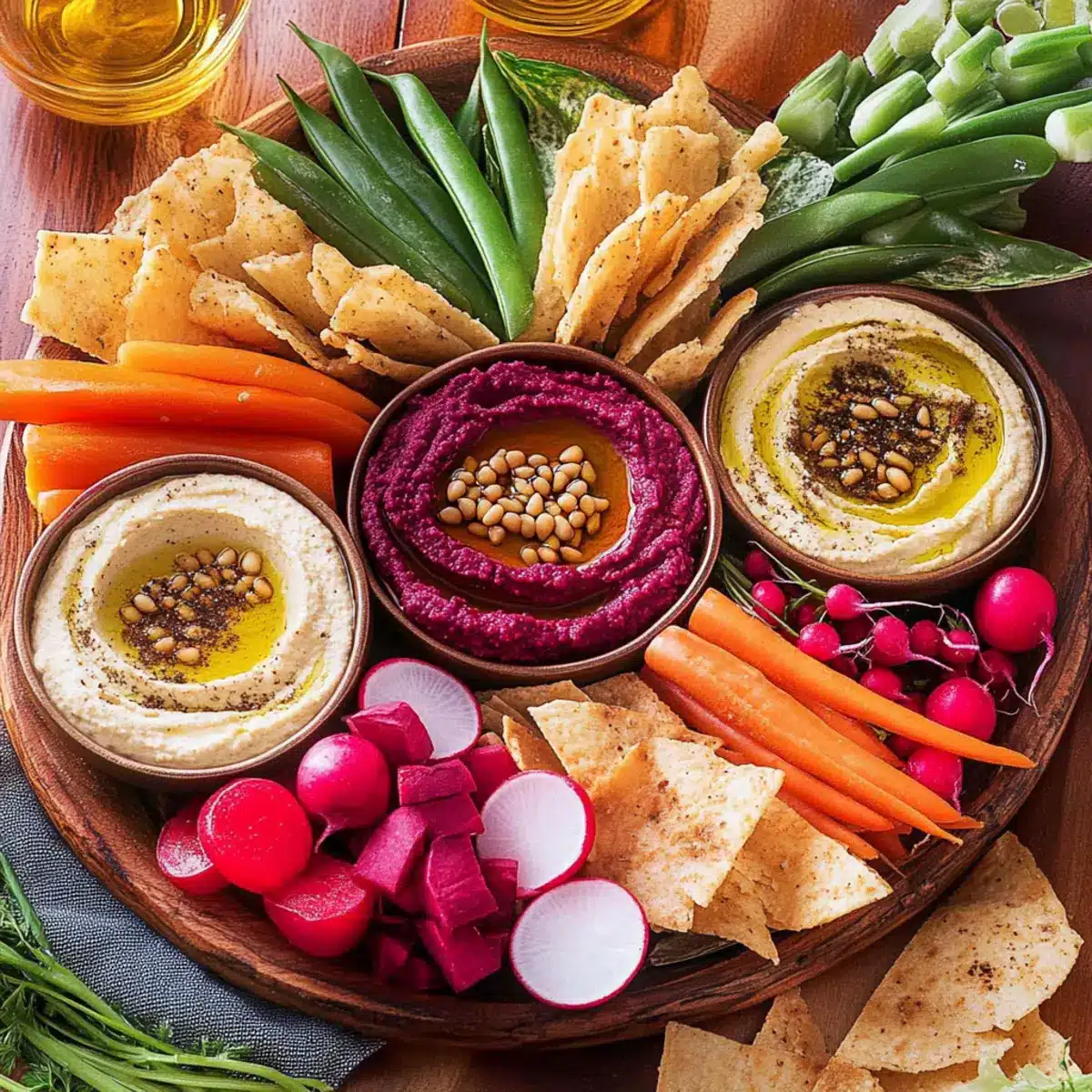
Homemade Hummus Platter Recipe FAQs
How do I choose ripe vegetables for my hummus platter?
Absolutely! When selecting vegetables, look for those that are vibrant and crisp. For bell peppers, choose ones that are firm and shiny without any soft spots. Carrots should be bright and firm, while snap peas should feel snap-worthy—if they’re stale or limp, they won’t be as enjoyable!
How can I store leftover hummus and veggies?
You can store leftover hummus in an airtight container in the fridge for up to 1 week, preserving its delicious flavors. As for the assorted veggies, they should be consumed within 3-4 days. A great tip is to keep them in a sealed container with a damp paper towel to maintain their crunchiness and freshness.
Can I freeze homemade hummus and how?
Very! Hummus is freezer-friendly. To freeze, simply place it in an airtight container or freezer bag, making sure to leave some space for expansion. You can freeze hummus for up to 3 months. When you’re ready to enjoy it, thaw it in the fridge overnight before serving, and give it a gentle stir for that creamy texture!
What if my hummus is too thick or grainy?
No worries! If your hummus turns out too thick, simply add a little water or olive oil, one tablespoon at a time, while mixing it until you reach your desired consistency. If you find it grainy, try blending it longer; a few extra minutes in the food processor can work wonders. If using canned chickpeas, ensure they’re rinsed well for a smoother finish!
Are there any dietary considerations for this platter?
Absolutely! This hummus platter is naturally vegetarian and can easily be made gluten-free, especially if you serve it with fresh veggies instead of pita. Just be sure to check labels for pre-packaged ingredients to avoid any hidden allergens. However, always consult your guests regarding their specific allergies for a worry-free snacking experience!
How can I enhance the flavors of my homemade hummus?
The more the merrier! You can elevate your hummus flavor by adding ingredients such as roasted garlic, fresh herbs like parsley or cilantro, or spices like cumin and paprika. For an extra burst of freshness, a squeeze of lemon juice right before serving can brighten up the flavors wonderfully!
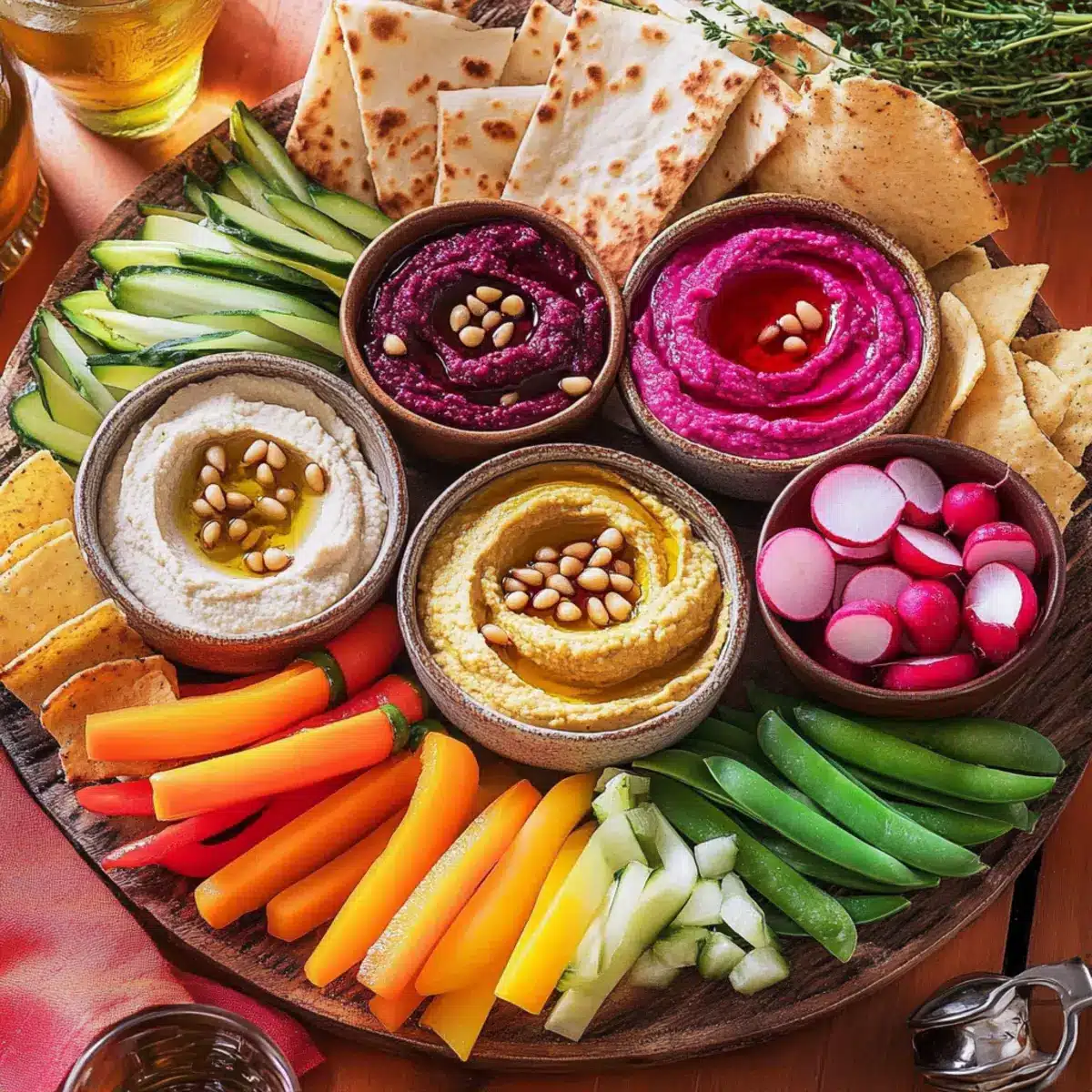
Delightful Homemade Hummus Platter for Colorful Snacking
Ingredients
Equipment
Method
- Place the chosen hummus varieties in separate bowls. Drizzle olive oil over plain hummus and garnish with lemon slices.
- Transfer pine nut hummus to a bowl and sprinkle with roasted pine nuts.
- Spoon beet hummus into its bowl and top with chopped canned beets.
- Arrange the bowls of hummus on a large serving platter.
- Artfully arrange the sliced vegetables around the hummus bowls.
- Place mini pitas and pita chips in the gaps on the platter.
- Drizzle remaining olive oil over the hummus and garnish with lemon wedges.
Leave a Reply