
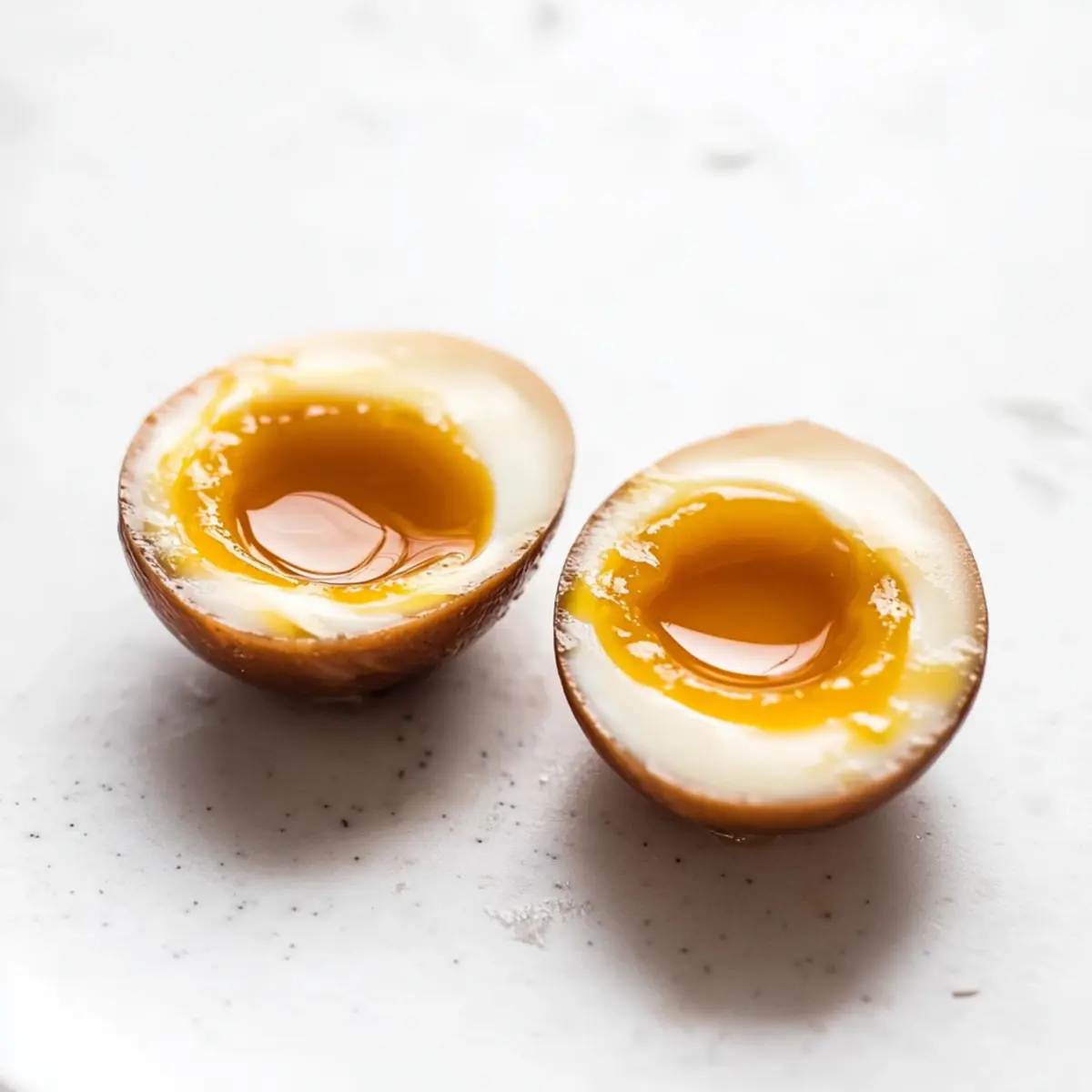
As I stirred my latest pot of ramen and let the aroma fill the kitchen, I couldn’t help but picture the perfect addition: jammy Ramen Eggs. Known as Ajitsuke Tamago in Japan, these marinated delights elevate any dish with their sweet, salty umami flavor and creamy texture. Best of all, they’re incredibly easy to whip up, making them a versatile asset for quick snacks or as a stunning topping for your favorite ramen. Each bite is a delightful experience that will have your family and friends coming back for more. Are you ready to dive into this Japanese culinary treasure and discover how to create your own perfect ramen eggs?

Why should I make ramen eggs?
Simplicity at Its Best: Crafting these jammy ramen eggs requires minimal effort, making them perfect for busy weeknights or weekend meal prep sessions.
Umami Explosion: The combination of mirin and soy sauce creates a depth of flavor that’s simply irresistible.
Versatile Snack: Enjoy them as a quick snack or elevate your ramen bowl, just like in a favorite restaurant. They’re the kind of crowd-pleaser that’ll impress anyone.
Personalize Your Flavor: Want a little heat? Cayenne pepper or ginger can easily be added, allowing you to customize these eggs to your taste.
Meal Planning Friendly: Make a batch to keep in the fridge for up to 5 days, ensuring you have a delicious option ready when hunger strikes. Pair them with other Japanese-inspired dishes, like a delectable Dumpling Ramen Bowl for an unforgettable feast!
Ramen Eggs Ingredients
• Get ready to create those deliciously jammy ramen eggs!
For the Marinade
- Mirin – Sweet rice wine that adds the iconic sweetness to your ramen eggs; Aji mirin works as a great substitute.
- Regular Soy Sauce – Provides essential saltiness; light soy sauce is recommended for perfect balance.
- Dark Soy Sauce – Adds deep flavor and beautiful color; if you’re out, mix regular soy sauce with a bit of brown sugar.
- Water – Optional; using it can help dilute marinade for eggs stored longer (up to 24 hours).
- Cayenne Pepper (Optional) – A pinch adds a lovely hint of spice; adjust to your preference for a little heat.
- Garlic (Optional) – Gives the marinade a flavorful kick; feel free to leave it out if you prefer a milder taste.
- Ginger (Optional) – Introduces warmth and pizzazz; use with moderation to avoid overwhelming the marinade.
For the Eggs
- Large Eggs – The star ingredient! Choose eggs of similar weight for even cooking and perfect results.
Step‑by‑Step Instructions for Perfect Ramen Eggs
Step 1: Prepare the Eggs
Fill a large pot with water, adding a pinch of salt or a splash of vinegar to prevent cracking. Bring the water to a boil over high heat, ensuring you have your large eggs ready to go. Keep an eye on the bubbles as they start to form, signaling it’s almost time for the next step.
Step 2: Boil the Eggs
Once the water reaches a rolling boil, lower the heat to medium and gently add the eggs one by one using a slotted spoon. For soft whites and a runny yolk, cook them for about 5 ½ minutes. For a slightly firmer texture, cook for 6 ½ minutes for beautifully jammy ramen eggs, or up to 7 minutes for a fully set yolk.
Step 3: Ice Bath
As soon as your timer goes off, swiftly transfer the cooked eggs into an ice bath filled with cold water and ice cubes. This crucial step halts the cooking process and helps achieve that ideal creamy texture. Allow the eggs to sit in the ice bath for at least 2-3 minutes, until cool to the touch.
Step 4: Peel the Eggs
Carefully crack the eggs by tapping them on a hard surface, then peel them under a gentle stream of running water. The water helps ease off the shell while keeping the eggs intact. Aim for a smooth process, enjoying the anticipation of your perfect ramen eggs soon to come!
Step 5: Make the Marinade
While your eggs cool, prepare the marinade. In a container, combine ¼ cup of mirin, ¼ cup of regular soy sauce, and 1 tablespoon of dark soy sauce. Optional spices like cayenne pepper, garlic, or ginger can be added for extra flavor. Mix these ingredients well, ensuring a harmonious balance of sweet and savory notes.
Step 6: Marinate the Eggs
Place the peeled eggs gently into the marinade, ensuring they are fully submerged. Cover the container with a lid or plastic wrap, and store in the refrigerator. Allow the ramen eggs to marinate for a minimum of 2 hours, or up to 24 hours for maximum flavor infusion, drawing out that sweet, umami goodness.
Step 7: Serve and Enjoy
After the marination time is complete, your perfect ramen eggs are ready to shine! Slice them in half and serve atop steaming bowls of ramen, or enjoy them as a delightful snack. Bask in the rich flavor and tender texture of your creation, knowing you’ve mastered the art of making these delectable Ramen Eggs!

What to Serve with Perfect Ramen Eggs
Discover how to create a complete and satisfying meal that enhances the delightful umami of your ramen eggs.
-
Steamed Bok Choy: Lightly steamed bok choy offers a refreshing crunch that complements the richness of the eggs beautifully, adding a hint of green to your plate.
-
Savory Miso Soup: The umami notes in miso soup will intertwine wonderfully with the flavors of ramen eggs, creating a warm and comforting contrast.
-
Fluffy White Rice: A fluffy serving of jasmine rice provides a neutral base that lets the marinated eggs shine, making each bite a little treasure.
-
Crispy Tempura Vegetables: The light, crisp texture of tempura vegetables enhances the meal’s contrast, inviting delightful crunches alongside creamy eggs.
-
Gyoza (Dumplings): These filled dumplings add a savory surprise, perfect for dipping into soy sauce. They’re the ideal partner to your ramen eggs, maintaining that authentic Japanese vibe.
-
Chilled Sake: A glass of chilled sake elevates the dining experience, its delicate flavors complementing the overall umami of your meal and enhancing the enjoyment of sweet, salty ramen eggs.
Tips for the Best Ramen Eggs
Perfect Timing: Keep an eye on the clock—cooking times matter! For jammy ramen eggs, aim for 6 ½ minutes for that ideal creamy yolk.
Ice Bath Importance: Don’t skip the ice bath! It stops the cooking process instantly, preventing overcooked eggs and preserving a tender texture.
Gentle Peeling: Peel eggs under running water to make it smoother. This helps remove the shell without damaging the delicate whites.
Marinade Balance: If your marinade tastes overly salty, dilute it with a bit of water. This allows for longer marination and more harmonious flavors.
Storage Wisdom: Store marinated ramen eggs in an airtight container in the fridge. They stay fresh for up to 5 days, making it easy to have a quick snack on hand!
Ramen Eggs: Flavorful Variations Await
Ready to make your ramen eggs uniquely yours? Let’s explore some delightful twists that will ignite your culinary creativity!
-
Spiced Up: Add chili oil to the marinade for a kick of heat. This creates a beautifully spicy contrast to the rich umami flavor.
-
Herb-Infused: Incorporate fresh herbs like scallions or cilantro into the marinade for a refreshing twist. This will brighten up the flavor profile wonderfully.
-
Sweet & Savory: Mix in a tablespoon of honey or brown sugar to the marinade for a subtly sweeter taste that balances the saltiness perfectly!
-
Sesame Touch: Drizzle a bit of toasted sesame oil over the marinated eggs before serving for a nutty aroma and flavor boost. It’s an excellent finishing touch.
-
Citrus Zing: Squeeze in some lime or lemon juice in the marinade for a vibrant, zesty note. This step adds brightness and freshness to the dish!
For even more inspiration, consider pairing your ramen eggs with a hearty bowl of Dumpling Ramen Bowl or trying a unique spin with a Ramen Carbonara Twist. The options are limitless when it comes to creating your perfect meal!
-
Pickled Charm: Before marinating, soak the eggs in a light pickle brine made of vinegar and sugar for an extra tang. It’s a unique surprise in every bite!
-
Umami Bomb: Add shiitake mushroom powder to the marinade for an extra punch of rich umami flavor that elevates your ramen eggs to new heights!
Make Ahead Options
These ramen eggs are ideal for meal prep, making your busy weeknights much smoother! You can prepare the eggs and marinate them up to 24 hours in advance. To do this, boil and cool the eggs as instructed, then peel them and place them in the marinade for full flavor penetration. For best results, don’t skip the ice bath as it ensures perfectly tender whites. If you need to, you can refrigerate these marinated eggs in an airtight container for up to 5 days; just remember to adjust marination time to prevent overly salty eggs. When you’re ready to enjoy, simply slice them in half and serve over fresh ramen or as a savory snack, delighting in the rich umami taste without any stress!
How to Store and Freeze Ramen Eggs
Fridge: Store your marinated ramen eggs in an airtight container for up to 5 days, ensuring they stay fresh and flavorful.
Freezer: While it’s best to enjoy ramen eggs fresh, you can freeze them for up to 2 months. Wrap each egg tightly in plastic wrap before placing them in a freezer bag.
Thawing: To enjoy frozen ramen eggs, thaw them overnight in the fridge and soak in fresh marinade for 1-2 hours to restore flavor.
Reheating: If desired, gently reheat the thawed eggs in warm water for a few minutes before serving to maintain their delicious texture.
Ramen Eggs Recipe FAQs
How do I choose the best eggs for ramen eggs?
Select large eggs that are similar in weight to ensure even cooking and consistent texture. For the best results, use fresh eggs as they tend to peel more easily than older ones. Look for eggs with smooth shells, avoiding those with dark spots or cracks.
How long can I store ramen eggs in the fridge?
You can keep your marinated ramen eggs in an airtight container in the refrigerator for up to 5 days. Ensure that they are well-submerged in the marinade to maintain flavor and moisture during storage.
Can I freeze ramen eggs, and if so, how?
Yes, you can freeze ramen eggs for up to 2 months. First, wrap each egg securely in plastic wrap, then place them in a freezer-safe bag. When you’re ready to enjoy them, thaw the eggs overnight in the fridge. To enhance flavor, soak the thawed eggs in fresh marinade for 1-2 hours before serving.
What if my ramen eggs turn out overcooked?
If your eggs are overcooked and the yolks are too firm, don’t worry! In the future, try using a timer to avoid cooking them longer than the recommended times. For softer yolks, aim for 6 ½ minutes of boiling, followed by a swift ice bath to prevent further cooking.
Can I modify the marinade for dietary restrictions?
Absolutely! If you need a gluten-free option, use tamari instead of regular soy sauce. For those with allergies to specific ingredients, feel free to omit optional elements like garlic or cayenne pepper. Adjusting the marinade ensures everyone can enjoy your delicious ramen eggs!
Are ramen eggs safe for dogs or other pets?
While ramen eggs are safe for dogs in moderation, they should not be served with soy sauce due to its sodium content. Always consult your veterinarian before introducing new foods to your pet’s diet.

Jammy Ramen Eggs: Your Ultimate Umami Snack Adventure
Ingredients
Equipment
Method
- Prepare the Eggs: Fill a large pot with water, adding a pinch of salt or vinegar. Bring to a boil.
- Boil the Eggs: Cook eggs for about 5 ½ to 7 minutes depending on desired texture.
- Ice Bath: Transfer eggs to an ice bath for at least 2-3 minutes.
- Peel the Eggs: Crack eggs and peel under running water.
- Make the Marinade: Mix mirin, soy sauces, and optional spices in a container.
- Marinate the Eggs: Submerge peeled eggs in the marinade for 2-24 hours.
- Serve and Enjoy: Slice eggs and serve on ramen or as a snack.
Leave a Reply